Guide
Wedding Sarees 2026: The Saree That Rings, the Three Minute Drape, and Where the Embroidery Went
Four wedding saree searches broke out in India this quarter: ghungroo sarees, ready to wear sarees with stitched blouses, heavy embroidery, and the girlish saree. What each one is, and which function it belongs to.
- Four wedding saree searches broke out in India this quarter: ghungroo, ready to wear, heavy embroidery and the girlish saree
- A ready to wear saree goes on in under three minutes, with sewn pleats and usually no petticoat
- The season's wedding embellishments run to antique zari, mirror work and scalloped borders
- The 2026 mood is intentional buying: fewer sarees, chosen to be worn again
Outfits and beauty · 11 min read · By The Shaadiwaale team
Search data has a way of announcing a trend before the boutiques do. In the 90 days to the end of October, four saree queries broke out on Google in India under wedding saree: the ghungroo saree, the ready to wear saree with a stitched blouse, heavy embroidery sarees for weddings, and, charmingly, the girlish saree for a wedding.1
Read together, they tell one story. The wedding guest of 2026 wants a saree that moves and sounds like an occasion, goes on in minutes rather than with pins and prayer, and spends its budget on visible work. The old divide, heirloom silk or nothing, has made room for a wardrobe that is lighter, quicker and more playful without letting go of craft.
This guide takes the four breakouts one at a time, then maps them onto the functions of an Indian wedding, because the honest answer to "which saree?" is always "for which day?".
Quick answer: The four wedding saree trends breaking out in India are, first, the ghungroo saree, a saree with decorative ghungroo inspired detailing along the border or pallu, often in lightweight tissue, whose movement sets it apart from regular festive sarees;2 second, the ready to wear saree, "a modern garment with pre-sewn pleats and an attached pallu" that goes on in under three minutes, usually with no petticoat needed;3 third, heavy embroidery for weddings, where the season's embellishments run to antique zari, mirror work and scalloped borders, with embroidered organza on the wedding list;4 and fourth, the girlish saree, the light, young wedding guest look built on soft fabrics and simple drapes. The 2026 mood overall is what one silk house calls intentional buying: sarees chosen to be worn to more than one occasion and to last beyond one season.5
In this article
- The four breakout sarees at a glance
- The ghungroo saree: the border that rings
- Ready to wear: the three minute saree
- Heavy embroidery: where the money should show
- The girlish saree: what young guests actually wear
- Which saree for which function
- Buying well: the intentional saree wardrobe
1. The four breakout sarees at a glance
| The trend | What it is | Best for | Worth knowing |
|---|---|---|---|
| Ghungroo saree | Ghungroo style detailing on the border or pallu, often on tissue | Mehndi, sangeet, cocktail | Movement is the point; keep jewellery simple |
| Ready to wear saree | Pre sewn pleats, attached pallu, stitched blouse | Guests with many functions, first time drapers | Goes on in minutes; pleats stay put |
| Heavy embroidery saree | Antique zari, mirror work, scalloped borders | The wedding and reception | Weight rises with the work; drape before you buy |
| Girlish saree | Light fabrics, soft colours, easy drapes | Sisters, cousins, young guests | Playful without costume |
Each trend's details and sources follow in its own section.
Collect your candidates: save the sarees you are weighing to an Inspiration board and the comparison gets much easier.
2. The ghungroo saree: the border that rings
The ghungroo saree is exactly what it sounds like: a saree with decorative ghungroo inspired detailing, usually along the border or the pallu, so the drape carries the suggestion of the dancer's anklet bells. One saree house describes the appeal plainly: the unique border detailing adds movement and character that sets it apart from regular festive sarees, with social media pushing the vibrant colours and statement borders through wedding and festive fashion.2
The common base is tissue, which gives a rich appearance while staying lightweight, in reds, pinks, yellows, blues, purples and maroons, though the style exists across fabrics.2 The styling advice from the same house is worth keeping: jhumkas, bangles and a matching blouse for the traditional reading; statement earrings, a sleeveless blouse and minimal accessories for the modern one; gold toned jewellery with the warm shades, silver or stone jewellery with the cool ones.2
Where it belongs: the functions built around music. A border that moves earns its keep at the mehndi, the sangeet and the cocktail, and fights the gravitas of the pheras.
Pair the metal to the shade: what gold, polki and silver toned sets cost is all in our wedding jewellery price guide.
3. Ready to wear: the three minute saree
The ready to wear saree, also sold as pre stitched or pre draped, is "a modern garment with pre-sewn pleats and an attached pallu": you step into it, fasten the waist and zip up, and the whole process takes under three minutes against the 15 to 20 of a traditional drape.3 The pleats are sewn, so they stay put through a long evening, most versions carry an attached inner lining in place of a petticoat, and a tailor can still adjust the waist and hemline.3
The style guides split it by occasion: a pre draped georgette or chiffon for a formal reception, a ruffle saree for the cocktail or sangeet, and the saree gown where even the blouse is built in.3 The 2026 refinement is restraint: the trend reports favour simpler pre draped versions, pre stitched pleats with flexible pallus, "Drapes that feel like sarees, not gowns".5
Who it is really for: the guest with a full run of functions in a few days, the cousin flying in the morning of the sangeet, and anyone who loves sarees more than she loves draping them. With a stitched blouse in the right size, the whole outfit becomes luggage proof.
Count the functions first: the wedding checklist shows how many occasions your outfit plan actually has to cover.
4. Heavy embroidery: where the money should show
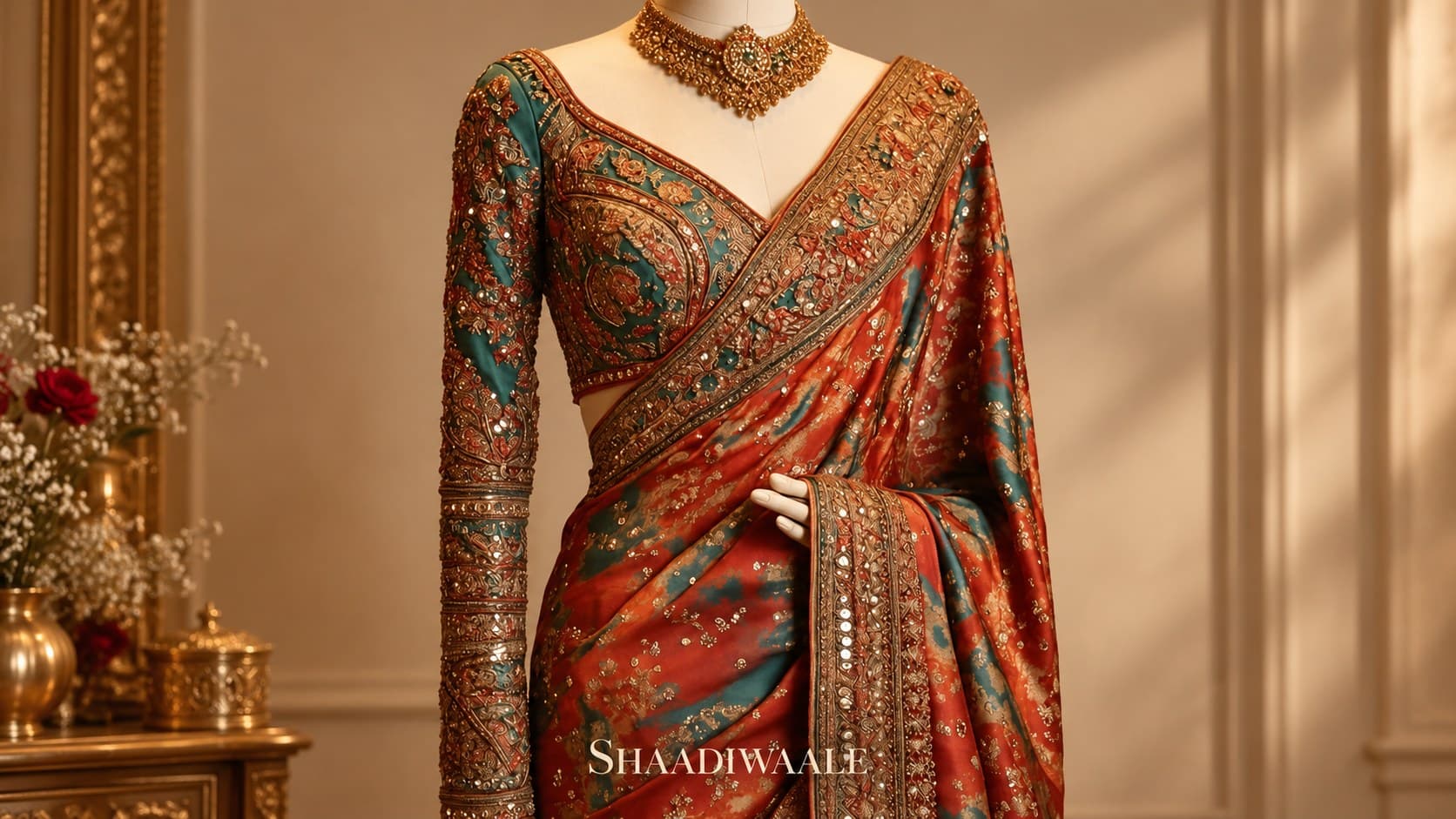
Heavy embroidery sarees for weddings broke out as a search for a reason: when budgets tighten, buyers spend on work they can see. The season's wedding embellishments, by one large saree house's trend list, run to scalloped borders, antique zari, mirror work and handwoven motifs, with embroidered organza on the wedding list and sequin and floral threadwork borders on the party side.4 The same list's wedding lane includes shimmering kora silks, pastel kanjivarams and red and gold revivals, which is where heavy work traditionally lives.4
Three buying rules keep heavy work from disappointing. Weight: dense embroidery on the whole body makes a saree heavy to wear through a long evening, so look for work concentrated on the border and pallu with a lighter body. Base cloth: embroidery on organza or tissue reads modern and photographs light; the same work on silk reads bridal. And craft over coverage: a narrow band of fine antique zari or mirror work beats an acre of machine sequins at the same price.
Where it belongs: the wedding itself and the reception, the two functions where the saree is allowed to outdress everything but the bride.
See how the couture houses do it: the handwork lesson runs through The Lehengas India Searched For This Season too.
5. The girlish saree: what young guests actually wear
The sweetest of the four breakouts is the girlish saree for a wedding, the search of a thousand younger sisters and college friends dressing for someone else's big day. The trade has an answer ready: younger women are already wearing sarees to college events, office parties and brunches,4 and the young wedding guest look assembles from the lightest ends of the other three trends.
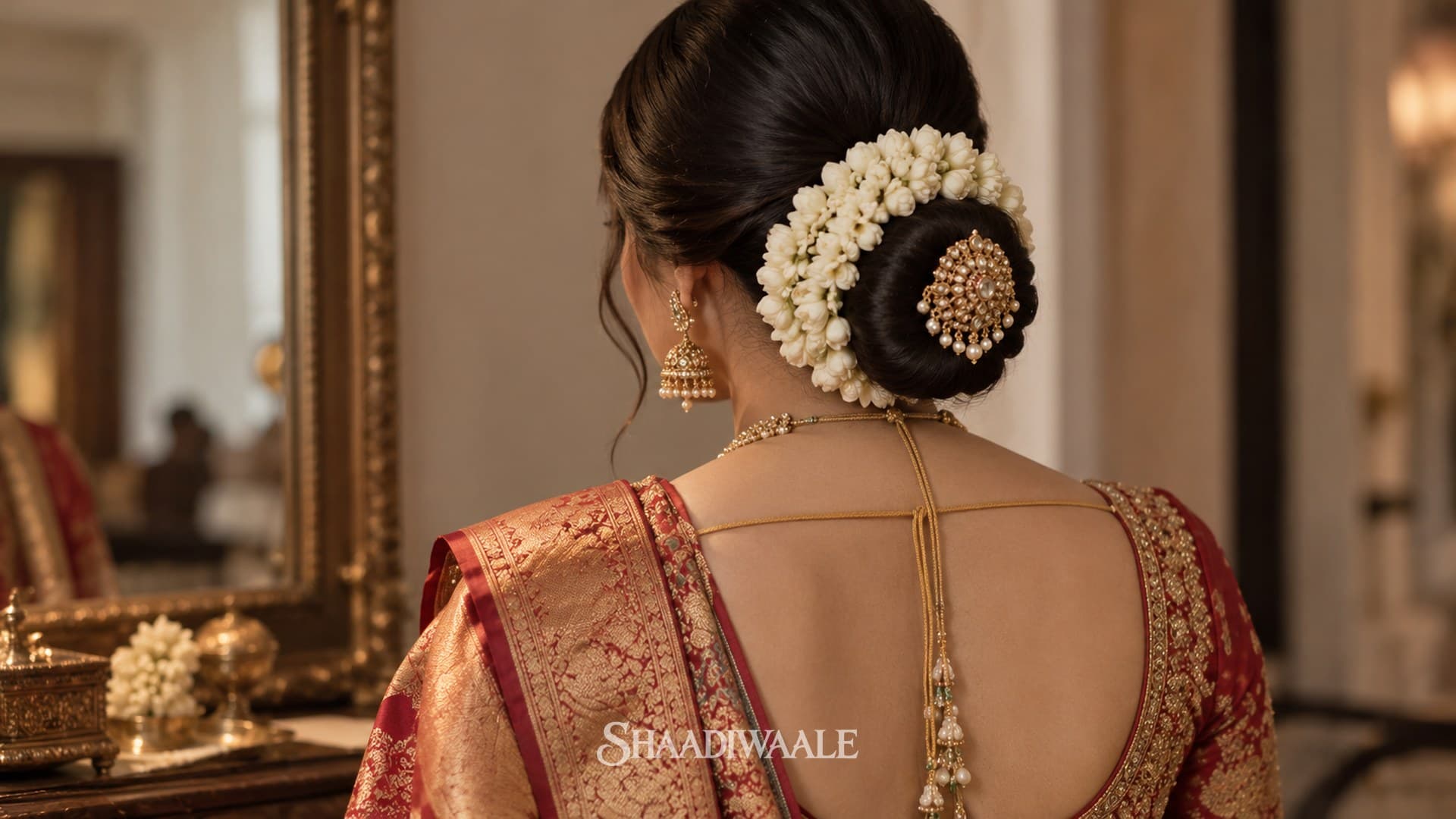
The build: a light base, organza, tissue, georgette or chiffon, in soft or vibrant colour rather than bridal maroon; an easy drape, often ready to wear, because confidence in a saree is mostly confidence that it will stay up; one playful detail, a ghungroo border, a ruffle, floral threadwork or a sequin border from the party lists;4 and a simple stitched blouse that will pair with the next saree too, since the trend reports warn against costume like blouses that pair with nothing else.5
The one rule: never compete with the bride's palette on the wedding day itself. Every other function is fair game.
Dress the whole bridesmaid row: save a shared Inspiration board so the sisters and cousins plan their sarees together.
6. Which saree for which function
| Function | The saree that fits | Why |
|---|---|---|
| Haldi | Light cotton or georgette, yellows, easy drape | Turmeric and silk are enemies |
| Mehndi | Ghungroo border, tissue, vibrant colour | Movement and music suit the day |
| Sangeet | Ready to wear ruffle or pre draped georgette | You will dance; the pleats must not |
| Pheras and wedding | Heavy embroidery, kanjivaram or kora silk, antique zari | The formal peak of the week |
| Reception | Embroidered organza or a pre draped evening saree | Polish with modern ease |
The mapping follows the sources' own occasion notes: ready to wear styles for receptions, ruffles for the sangeet and cocktail,3 the wedding lists' silks and embroidered organza for the main day,4 and the ghungroo border's festive character;2 the match of each to the music facing functions is our own reading.
Build the day by day plan: the functions, their order and who attends what live in your wedding plan.
7. Buying well: the intentional saree wardrobe
The best summary of the 2026 saree mood comes from a silk house's own trend report: "The biggest shift in 2026 isn't about dramatic new designs. It's about intentional buying," with monotone sarees, subtle borders and minimal zari named as the trends worth investing in, and over structured drapes, heavy ruffles, costume like blouses and trend specific colours the trends it calls hard to live with.5
Translated into a shopping method for a wedding season: buy the heavy embroidery piece once and well, in a colour you will wear again; rent or buy light for the one night trends, the ruffles and the ghungroo borders; let the ready to wear pieces carry the travel functions; and put the difference into the blouse tailoring, which decides how expensive every saree looks.
And drape before you buy, always. A saree's weight, fall and sound, and the ghungroo saree really does have a sound, only tell the truth on the body.
Who is making and fitting it all: bridal wear designers and boutiques handle the tailoring; our team can point you to the right ones in your city.
Closing thoughts
Four breakout searches, one message: the wedding saree has relaxed without getting lazy. It rings at the mehndi, zips up in three minutes at the sangeet, saves its heaviest work for the pheras, and lets the youngest guests be playful everywhere else. Spend intentionally, drape before buying, and the same wardrobe will serve wedding seasons for years.
The one thing that should never take three minutes of fuss is telling people where to be: your online wedding invitation handles that, beautifully and once.
Frequently asked questions
What is a ghungroo saree?
A ghungroo saree is a saree with decorative ghungroo inspired detailing, usually along the border or the pallu, echoing the small bells of a dancer's anklet. The detailing adds movement and character that sets it apart from regular festive sarees, which is why it took off through wedding and festive fashion on social media. Common versions come in lightweight tissue in reds, pinks, yellows, blues, purples and maroons, though the style exists in other fabrics too. It suits the music facing functions, the mehndi, sangeet and cocktail, better than the formal wedding day itself.
What is a ready to wear saree with a stitched blouse?
A ready to wear or pre stitched saree is a garment with pre sewn pleats and an attached pallu: you step in, fasten the waist and zip up, with the whole process taking under three minutes against 15 to 20 for a traditional drape. The pleats are sewn so they stay in place through an event, most versions include an attached inner lining in place of a petticoat, and a tailor can adjust the waist and hem. Paired with a stitched blouse in your size, it makes a saree as simple to wear as a gown while still reading as a saree.
Are heavy embroidery sarees in fashion for weddings in 2026?
Yes, with the work concentrated rather than everywhere. The season's wedding embellishment lists run to antique zari, mirror work, scalloped borders, handwoven motifs and embroidered organza, alongside kora silks, pastel kanjivarams and red and gold revivals. The trend reports' caution is about structure, not craft: over structured drapes and costume like blouses are the ones they call hard to live with, while fine handwork on a wearable base sits among the trends worth investing in. Practically, choose embroidery concentrated on the border and pallu over a fully worked body, and your shoulders will thank you by the reception's end.
Which saree should a wedding guest wear to each function?
Map the saree to the day. Haldi takes light cotton or georgette in yellows, because turmeric stains. The mehndi suits vibrant colour and playful borders, where the ghungroo saree shines. The sangeet wants a drape that survives dancing, which is the ready to wear ruffle's whole argument. The pheras and wedding are the formal peak, where silk and heavy embroidery belong. The reception takes embroidered organza or a pre draped evening saree for polish with ease. The single rule across all of them: do not compete with the bride's palette on the wedding day.
What saree suits a young woman attending a wedding?
The girlish saree the searches are looking for assembles from light fabric, easy drape and one playful detail. A tissue, organza, georgette or chiffon base in a soft or vibrant shade, a ready to wear drape if traditional draping feels risky, and a ghungroo border, ruffle or floral threadwork border as the personality. Keep the blouse simple and reusable rather than costume like, and keep bridal maroons and the bride's own colours for her. Younger women already wear sarees to college events and office parties, and a wedding is the best stage of all for a first saree.
Is a ready to wear saree acceptable at a traditional wedding?
Yes. Once draped, a good pre stitched saree is visually a saree, and the 2026 direction is explicitly towards versions that stay closer to the traditional silhouette, pre stitched pleats and flexible pallus that feel like sarees rather than gowns. For a formal reception, the style guides themselves suggest pre draped georgette or chiffon. If the family leans orthodox, choose a classic drape shape in a traditional fabric and nobody will ask how it went on; save the saree gown, where the blouse is built in, for the cocktail and sangeet side of the week.
Share this guide
Send it to the family group, or keep it for later.
Questions about your wedding?
Our team answers questions about venues, vendors and the budget, free on WhatsApp.
About Shaadiwaale
Indian wedding planning in one place: venues and vendors with real prices, free kundli matching, invitations and tools to plan every function together.
Every function. Every family. One plan.
Notes
- Google Trends: wedding saree, India, past 90 days, Google Trends, seen 31 October 2026. ↩
- What Is a Ghungroo Saree? Trending Styles and Buying Guide, Shri Hari Sarees, 5 October 2026. ↩
- Ready to Wear Sarees, Aza Fashions, 13 August 2026, updated 1 September 2026. ↩
- Tailored for You: Daughters of Pothys' Curated Collection of Saree Trends in 2026, Pothys, 2026, seen 31 October 2026. ↩
- Saree Trends 2026: What's Actually Wearable, Not Just Runway, Kuberan Silks, 16 March 2026. ↩