Guide
Mehndi in India: The Complete Guide
Everything your family needs for the mehndi: what henna is, how the ceremony works across communities, the design styles, staying safe, getting a dark colour and booking the right artist.
- Natural henna stains orange first and darkens to reddish brown over about three days
- Avoid "black henna": it can contain PPD, which can blister and scar
- The mehndi ceremony differs by community; here is how, side by side
- Book your bridal mehndi artist early and ask for a trial
Functions · 42 min read · By The Shaadiwaale team · Updated 17 October 2026
Mehndi, in plain words
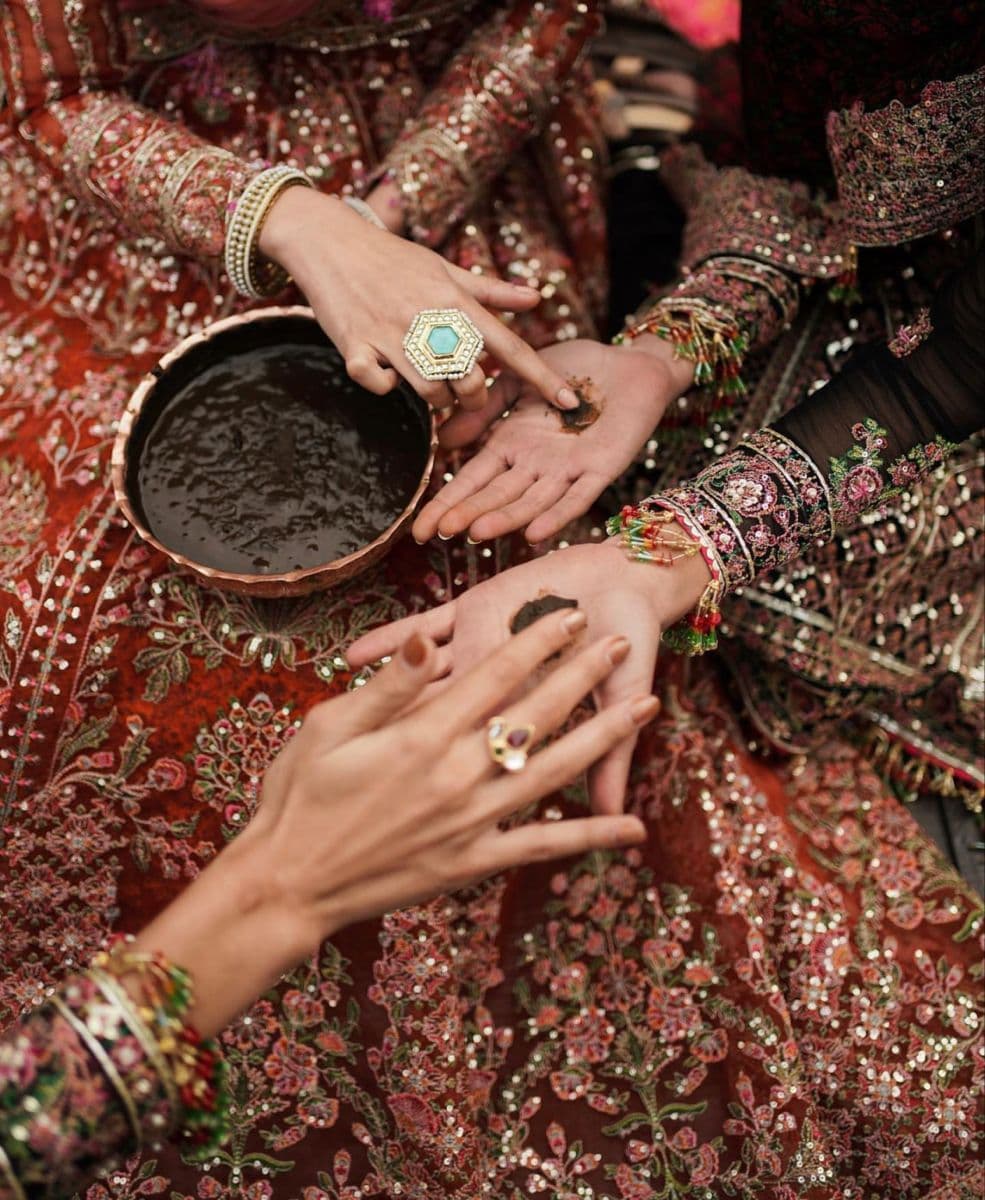
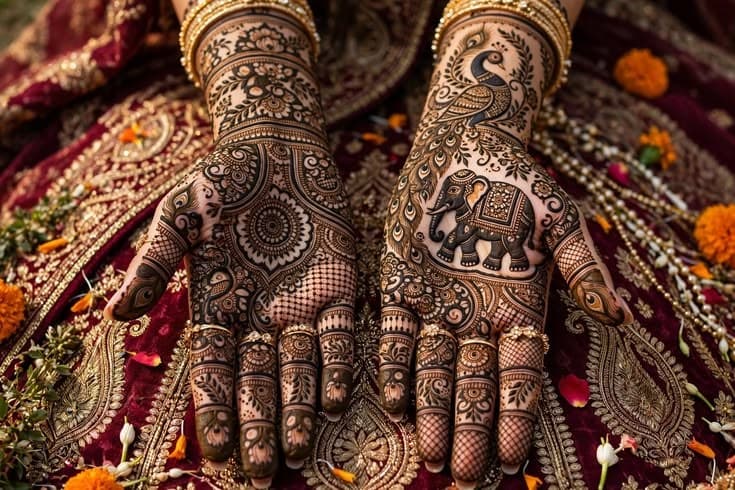
If you have ever been to an Indian wedding, you know the moment. Music in the background, aunties arguing happily over whose design is prettier, the bride sitting very still while an artist draws peacocks and paisleys up to her elbows. That is mehndi: a reddish brown stain made from the crushed leaves of the henna plant, drawn on the skin in patterns that last a week or two and then quietly fade away.
It looks simple. It isn't, quite. There's a whole function built around it, different customs in every community, dozens of design styles, a few real safety rules, and plenty of advice from relatives about how to get the colour dark. If you are planning a wedding, a festival, or just your first proper mehndi, it can feel like a lot.
So we have put everything in one place. This guide walks you through what mehndi actually is, where it comes from, what the mehndi ceremony looks like in different families, how to choose a design, how to stay safe, how to get that deep colour, and how to find an artist you trust. Read it top to bottom, or jump to the part you need.
In short: mehndi is meant to be a happy, unhurried few hours with the people you love. Everything below is here to help it stay that way.
Quick answer: Mehndi (also spelt mehendi or mehandi, and called henna) is a temporary skin decoration made from a paste of dried, powdered henna leaves (Lawsonia inermis). The paste stains the top layer of skin orange, which darkens to reddish brown over about three days and fades within one to three weeks. At Indian weddings it has its own function, usually a day or two before the wedding, where the bride has detailed bridal mehndi and family and guests get smaller designs. Use only natural henna: so-called "black henna" can contain PPD, a chemical that can cause blistering and scarring.
What's in this guide
- What mehndi is, and how the stain works
- A short history of mehndi in India
- Why mehndi matters at a wedding
- The mehndi ceremony, community by community
- Planning the mehndi function: a checklist
- Mehndi design styles explained
- Designs by placement: hands, fingers, feet
- Bridal mehndi: motifs, hidden names and the long sitting
- Mehndi for the groom, family, guests and children
- Mehndi beyond weddings: festivals and occasions
- What mehndi is made of
- Natural henna, chemical cones and black henna: staying safe
- How to get a dark mehndi colour
- How long mehndi lasts, and fading it gently
- Hiring a mehndi artist
- Outfits, decor, songs, games and gifts for the function
- Plan it on Shaadiwaale
- Frequently asked questions
What mehndi is, and how the stain works
Mehndi is the art of decorating skin with henna paste. Henna itself is a plant, Lawsonia inermis, a shrub whose leaves are dried and ground into a fine green powder. Mix that powder into a paste, draw it on the skin, leave it for a few hours, and you get a stain that sits in the top layer of your skin for days.
The word mehndi comes from the Sanskrit mendhika, the name for the henna plant.1 From there it travelled into Hindi, Urdu, Punjabi, Gujarati, Bengali and many other languages, which is why you will see it spelt so many ways. Mehndi, mehendi and mehandi all mean the same thing, and people search for all three.
What mehndi is called across India
| Language | What people call it |
|---|---|
| Hindi, Urdu, Punjabi | Mehndi, mehendi, mehandi (also heena) |
| Bengali | Mehedi |
| Marathi | Mendi |
| Gujarati | Mahendi |
| Tamil | Maruthani |
| Telugu | Gorintaku |
| Kannada | Madarangi |
| Malayalam | Mylanchi |
In the South especially, many families still grind fresh leaves at home, and the word often means that fresh leaf paste as much as the cone.
How the stain actually works
Here is the bit most people never get told. The colour in henna comes from a natural dye molecule called lawsone. When the paste sits on your skin, lawsone slowly moves out of the paste and into the outermost layer of skin, where it binds to the proteins there. That bond is the stain.2
This explains a lot of the advice you will hear:
- The colour starts orange. When you first scrape the paste off, the stain is bright orange. Over the next two to three days it oxidises and deepens to a reddish brown. So don't panic on day one.
- Palms and soles go darkest. The skin there is thicker, so there is more for the dye to bind to. Arms and the backs of hands usually come out lighter.
- It fades as your skin renews. The stain is not a tattoo. As the top layer of skin naturally flakes off, the colour goes with it, usually within one to three weeks.
Why it matters: once you know the stain lives in the top layer of skin, every tip about dark colour and long-lasting mehndi makes sense. Give the dye time to move into the skin, and then be gentle with that skin for a while.
Mehndi, henna, heena: is there a difference?
Not really. Henna is the English name for the plant and the dye; mehndi is the South Asian word for both the paste and the art of applying it. Heena is a common alternative spelling. The one real distinction that matters is between natural henna, which is plant based, and products sold as "black henna" or quick-colour cones, which may contain chemicals. We cover that properly in the safety section, because it is the one thing in this guide you should not skip.
A short history of mehndi in India
Henna is old. Really old. It was traded in ancient Babylonia and has been found on some mummies in ancient Egypt, and it has been used across North Africa, the Middle East and South Asia for a very long time.2
In India, cave paintings in the Deccan suggest people were decorating with henna by around the fourth century CE. Historians think it became widespread from around the twelfth century, and that it grew more popular still under the Mughals, whose courts shaped so much of India's art, architecture and pattern-making.1 You can still see that influence in the paisleys, arches, jaal (net) patterns and flowing floral vines in many traditional designs.
Over the centuries, mehndi did something lovely: it stopped belonging to any one group. Hindu, Muslim, Sikh, Jain and Christian families across India all have their own mehndi moments today, from weddings to Karva Chauth, Teej and Eid. Each region added its own touch. Rajasthani designs became known for dense, intricate detail and figures. Arabic-influenced styles brought bold, flowing vines with open skin between them. Southern homes kept the tradition of fresh leaf paste, ground on a stone.
The last twenty years have changed mehndi again. Cones replaced sticks and fine brushes. Artists began to work as professionals, with portfolios on Instagram. Brides started asking for minimal designs, portraits of the couple, even their love story drawn across both arms. And a darker side arrived too: chemical "instant" colours, which we'll come to.
For the full story, from Egyptian mummies to the Mughal courts, and which popular claims are only legend, read the history of mehndi.
Why it matters: when your grandmother insists on a particular motif, or your mother-in-law asks for the old-style design, they are passing on something that has been handed down for a very long time. You don't have to follow every rule, but it's worth knowing where they come from.
Why mehndi matters at a wedding
Ask ten families why they do mehndi and you will get ten answers, most of them told with a smile. Here are the ones you will hear most often.
It is a sign of good luck and celebration
In many traditions, mehndi is considered auspicious, a mark of happiness on the hands of someone about to begin something new. For many Hindu brides it is one of the solah shringar, the sixteen adornments of a bride, alongside sindoor, bangles, the bindi and the rest. Putting it on is a way of saying: the celebrations have begun.
The darker the colour, the deeper the love
This is the belief every bride hears, usually from a giggling cousin. The darker your mehndi, the more your partner loves you.1 In some families the joke is about the mother-in-law instead: a dark stain means she will adore you. Nobody really believes the colour predicts a marriage, of course. But it explains why everyone is so invested in getting it dark, and why aunties will happily tell you their secret methods.
The hidden name
Many artists hide the groom's name or initials somewhere in the bride's design, tucked into a petal or a vine.1 On the wedding night, or sometimes in front of the whole family, the groom has to find it. Some families say whoever finds it first will have the upper hand in the marriage. It's a small game, but it often becomes one of the funniest memories of the wedding.
A pause before the rush
This one is less talked about, but it might be the most important. A bridal mehndi sitting takes hours, and the bride cannot do much with wet paste on her hands. In some families, there's even a playful rule that the new bride is excused from housework until her mehndi fades. So for one afternoon, she sits, and everyone comes to her. Sisters feed her, friends tell stories, elders bless her. Before the noise of the wedding begins, mehndi gives the family a slow, warm few hours together.
A family occasion, not just a bridal one
The bride gets the most elaborate design, but almost everyone joins in: sisters, cousins, mothers, friends, and more and more often the groom and the men of the family too. It is one of the few functions where every generation is in the same room, doing the same thing.
Why it matters: when you plan your mehndi, plan for the feeling as much as the designs. Leave time for people to sit, chat and eat, not just to queue for the artist.
The mehndi ceremony, community by community
The mehndi ceremony (also called the mehndi function, mehendi rasam or mehndi night) is the pre-wedding gathering where the bride gets her bridal mehndi and the women of the family, and often the men too, get theirs. It is usually relaxed, colourful and full of music and food. We explain each ritual, and what it is believed to mean, in mehndi ceremony rituals and their meaning.
When it happens
Most families hold the mehndi one or two days before the wedding. Some keep it as a quiet afternoon at home; others turn it into a full evening with a stage, a DJ and a few hundred guests. It is often paired with another function: mehndi in the afternoon and sangeet at night, or haldi in the morning and mehndi after lunch.
A practical tip if you are pairing it with haldi: do the haldi first. Turmeric paste, washing and scrubbing are all things fresh mehndi doesn't like, so it is easier to finish the haldi, clean up, and then sit down for mehndi.
Who hosts it
Traditionally the bride's family hosts the bride's mehndi at their home or venue. In many families the groom's side holds its own smaller mehndi on the same day. More and more couples now do a joint mehndi, especially at destination weddings where everyone is already in one place. There is no wrong answer; it simply depends on how your families like to celebrate.
What usually happens
- The bride's sitting starts early. Bridal mehndi takes hours, so the artist often starts with the bride before guests arrive.
- A first touch from the elders. In many families an elder, often the mother or grandmother, places the first dot or a small design on the bride's palm as a blessing before the artist begins.
- Guests get their designs. Assistant artists set up at tables or on floor seating to give smaller designs to family and friends.
- Music, dancing and food. Folk songs on the dholak, Bollywood songs, dancing, and lots of snacks. Since the bride's hands are covered, someone usually feeds her.
- The paste dries, the stories flow. The bride sits with her hands up for a long while. This is when the teasing about hidden names and dark colour begins.
How it differs across communities
Every family has its own version, and even neighbours from the same community do it differently. Treat this as a starting point and ask your elders what matters to your family.
| Community | How the mehndi is often celebrated |
|---|---|
| Punjabi | A lively evening of dhol, boliyan (playful folk couplets) and dancing, often close to the sangeet. The groom's family often has its own celebration. |
| Rajasthani and Marwari | Bridal mehndi is a big deal, with dense, detailed traditional designs and women singing traditional mehndi songs. |
| Gujarati | Mehndi is often an evening affair and is sometimes combined with garba or dandiya. |
| North Indian Muslim | Often a full evening of its own, sometimes called rasm-e-henna, with dholak songs. Elders may place a little henna on the bride's palm before the full design. |
| Maharashtrian | Often a smaller gathering with close family a day or two before the wedding. |
| Bengali | Alta, a red dye painted on the feet and hands, has long been part of a Bengali bride's look. Many Bengali brides now also hold a mehndi function. |
| Tamil, Telugu, Kannada and Malayali | Traditionally, fresh henna leaves (maruthani, gorintaku, madarangi, mylanchi) were ground and applied at home. A separate mehndi function with cone designs has become common in recent years. In Kerala, especially in Muslim families, the mylanchi night before the wedding has its own songs. |
| Christian | Many Christian brides in India now hold a mehndi or henna evening as part of the pre-wedding celebrations. |
Why it matters: if two families from different communities are coming together, the mehndi is a lovely place to blend both traditions. A Punjabi dhol and a Tamil grandmother's leaf paste can absolutely share one afternoon.
Planning the mehndi function: a checklist
The mehndi is one of the easier functions to plan, as long as you start a little early and remember one thing: the bride's sitting is long, and everything else should fit around it.
A simple timeline
| When | What to do | Why |
|---|---|---|
| 3 to 4 months before | Shortlist artists, look at their real bridal work (not just edited photos), and book your bridal artist. | Good artists fill up quickly in wedding season. |
| 6 to 8 weeks before | Tell the artist roughly how many guests want designs, and agree on how many assistants they will bring. Decide on home or venue, and the decor. | The guest queue is what makes or breaks the day. |
| 3 to 4 weeks before | Do a trial on a small patch of skin: same paste, same artist. | It shows you the real colour and catches any skin reaction early, with time for it to fade. |
| 2 weeks before | Finalise the design, reference photos, motifs and the hidden name. Book the dholak or DJ and plan the menu. | No last-minute decisions while the paste is on. |
| 2 to 3 days before | Finish waxing, manicure, pedicure, scrubs and any facial on hands or feet. | You can't do these on top of fresh mehndi without fading it. |
| The day before | Gently exfoliate hands and feet. Skip lotions and oils. | Clean, bare skin takes colour better. |
| On the day | Have a helper for the bride, snacks she can eat without hands, and a charged phone on a stand. | She won't be able to use her hands for hours. |
| After | Let the paste dry, follow the artist's aftercare, and keep the hands away from water for as long as you can. | The colour keeps developing for two to three days. |
You can add these straight into your wedding checklist on Shaadiwaale, with dates worked out from your wedding day: start your checklist.
What you'll need on the day
How many artists do you need?
It depends on how many guests want designs and how detailed those designs are. Instead of guessing, ask your artist how many guest designs each assistant can comfortably do in an hour, then work backwards from your guest list and the hours you have. If the queue looks long, offer a choice of small and quick designs alongside the detailed ones.
Why it matters: the most common complaint about mehndi functions is not the designs, it's the waiting. A little planning here keeps everyone happy, including your artist.
Mehndi design styles explained
When you scroll through mehndi designs, they can all start to blur together. In reality, most designs come from a handful of styles, and once you can name them, it becomes much easier to tell your artist what you want. For a closer look at every style and how to tell them apart, read types of mehndi designs.
The main styles at a glance
| Style | What it looks like | Works well for | Monthly searches in India |
|---|---|---|---|
| Traditional Indian (Rajasthani, Marwari) | Dense, detailed patterns that fill the hand: paisleys, peacocks, elephants, palanquins, the bride and groom | Brides who want the full traditional look | Not enough data |
| Arabic | Bold, flowing floral vines in diagonal trails, with plenty of open skin | Guests, modern brides, anyone short on time | 1,500,000 (arabic mehndi design) |
| Minimal | A few small motifs, fingertip caps, fine lines and lots of bare skin | Office-going brides, guests, festivals | 165,000 (minimal mehndi designs) |
| Floral (lotus, rose) | Large blooms as the centrepiece, with leaves and vines | Brides and guests; pairs with any style | 74,000 (lotus mehndi design) |
| Mandala (gol tikki) | One round motif in the centre of the palm, often with matching fingertips | Quick guest designs, children, festivals | 49,500 (mandala mehndi design) |
| Pakistani | Very fine, intricate detail with shading, filling the hand like lace | Brides who love detail | 22,200 (simple pakistani mehndi design) |
| Peacock | The peacock as the main motif, often on the palm or wrist | Brides; a traditional favourite | 4,400 (peacock mehndi) |
| Indo-Arabic | Indian motifs placed inside an Arabic-style flowing layout | Brides who want both | 3,600 (indo arabic mehndi designs) |
| Jaal (net) | A lattice or net pattern across the hand | Brides; a classic Rajasthani element | 1,600 (jaal mehndi design) |
| Portrait and story | The couple, their story, landmarks, even pets, drawn as scenes | Brides who want something personal | 1,000 (portrait mehndi designs) |
| Moroccan | Bold geometric lines and shapes | Guests who want something different | Not enough data |
| Lace glove | Fine, lace-like patterns covering the hand like a glove | Modern brides and guests | Not enough data |
Monthly searches are Semrush estimates for Google India from data exported in September and October 2026. They show what people are curious about, not what is better.
"Simple" is the most searched word of all
The single biggest search in this whole area is "simple mehndi design", at about 3,350,000 searches a month. "Simple" isn't really a style. It usually means a design that takes less time, uses more open skin, and looks neat rather than busy. Simple Arabic, simple mandala and simple finger designs all count. If you are a guest, or a bride who doesn't want to sit for hours, simple is your friend, and it can still look beautiful.
How to choose a style
- Start with your outfit. A heavily embroidered lehenga can take a dense traditional design. A pastel, minimal outfit often looks better with lighter, airier mehndi.
- Think about time. Traditional and Pakistani styles take the longest. Arabic, mandala and minimal are much quicker.
- Think about your hands. Long fingers suit vertical, flowing Arabic trails. Smaller hands can look lovely with a single bold mandala.
- Mix if you like. Many brides choose a traditional palm and an Arabic back of the hand, or dense hands with minimal feet. Your artist will help you balance it.
- Bring two or three references, not twenty. Too many reference photos confuse the brief. Pick the few you love most and say what you love about each.
Why it matters: the right style isn't the most popular one. It's the one that suits your hands, your outfit and how long you're happy to sit still.
Designs by placement: hands, fingers, feet
Where the mehndi goes changes the design, the time it takes and the colour you will get. Here is what to expect for each placement.
| Placement | What it usually looks like | Good to know | Monthly searches in India |
|---|---|---|---|
| Full hand | Palm and back of the hand, often up to the wrist or elbow | The bridal standard. Takes the longest. | 450,000 (full hand mehndi design) |
| Back hand | Vines, mandalas or lace across the back of the hand and fingers | Shows in every photo of you holding something, but stains lighter than the palm. | 368,000 (back hand mehndi design) |
| Front hand (palm) | A central motif or a full design across the palm and fingers | Takes the darkest colour, because the skin is thicker. | 301,000 (mehndi design front hand) |
| Feet and legs | Toes, the top of the foot and up to the ankle or shin, often like an anklet (payal) | Needs time to dry before you walk. Soles stain very dark. | 201,000 (leg mehandi design) |
| Fingers | Caps on the fingertips, rings, bands and small motifs | Quick, cute and photogenic. Great for guests. | 74,000 (finger mehndi design) |
| Arms | The design continues past the wrist, to the elbow or beyond | Usually bridal. The forearm stains lighter than the hand. | Not enough data |
Monthly searches are Semrush estimates for Google India, September and October 2026.
Front hand or back hand?
If you only want one side, think about where people will see it. The palm gets the darker colour and has the best space for a big central motif, but it is mostly hidden unless you hold your hands up. The back of the hand shows in almost every photo: holding flowers, during the pheras, resting on your lap. That's why so many brides spend a little extra effort on the back, and why back-hand designs are searched so often.
Feet: the part everyone forgets
Bridal feet mehndi usually covers the toes and the top of the foot, sometimes up to the shin, often in an anklet-like pattern that matches the hands. The soles take colour very deeply. A few practical things:
- Do feet first or last, but plan for them. Many artists do the feet while the hand paste is drying.
- You can't walk until the paste is dry, so keep slippers, a stool and a helper nearby.
- Bridal feet sometimes get a lighter design if the bride will be in shoes for long functions.
Fingers: small space, big impact
Finger designs are the easiest way to make even a simple mehndi look finished. Fingertip caps (a solid fill at the tip), thin rings and tiny vines take a few minutes each and photograph beautifully. For guests who don't want a full design, a mandala on the palm with matching fingertips is a classic choice.
Why it matters: when you brief your artist, talk about placement before style. "Full hands to the elbow and feet to the ankle" tells them more about your time and budget than any reference photo.
Bridal mehndi: motifs, hidden names and the long sitting
Bridal mehndi is in a league of its own. It covers more skin, carries more meaning, and usually takes the best part of an afternoon. Here is how to make it feel special rather than exhausting.
Motifs and what they are often said to mean
Every motif in a traditional bridal design comes with a story. Meanings vary between families and regions, so take these as the common ones you will hear, not fixed rules. Our dictionary of mehndi motifs covers many more, and how to combine them.
| Motif | What it is often said to stand for |
|---|---|
| Peacock | Beauty, grace and love |
| Elephant | Good fortune and a royal welcome |
| Doli (palanquin) | The bride's journey to her new home |
| Kalash (pot) | Abundance and a full home |
| Lotus | Purity and new beginnings |
| Paisley (mango or kairi) | Fertility and plenty |
| Bride and groom figures | The couple themselves, often shown at the varmala or the pheras |
| Shehnai and dhol | The music of the wedding day |
| Sun, moon or stars | A lifetime together |
Modern brides add their own: the city where they met, a pet, a favourite song lyric, the date of the wedding, or a little drawing of a first trip together. If it means something to you, it belongs.
Hiding the name
Tell your artist early if you want the groom's name or initials hidden, and how hard you want it to be to find. Some brides want it tucked into a petal on the palm; others want it barely visible in the lattice of the wrist. Agree on the spelling (English or another script) before the day, so nobody is guessing with wet paste on your hands.
When to schedule it
Because the stain starts orange and deepens over two to three days,2 most brides have their mehndi one or two days before the wedding. That way the colour is close to its darkest when it matters most. If your wedding has several functions over several days, plan backwards from the day you most want dark colour, usually the pheras or nikah.
How long it takes
It depends on how much skin is covered and how detailed the design is. Full hands to the elbows with detailed feet can take several hours, sometimes most of the day. Ask your artist for an honest estimate for your exact brief, and add buffer time on top.
Making the long sitting comfortable
- Eat and use the washroom before you start. Once the paste is on, both get complicated.
- Wear something easy. A sleeveless or loose, front-opening top, nothing you have to pull over your head.
- Sit well. A proper backrest and cushions under your arms make a huge difference after the first hour.
- Keep warm. Cold skin takes colour less easily, so avoid sitting directly under the air-conditioning.
- Have a helper. Someone to feed you, hold your water with a straw, answer your phone and keep the aunties happy.
- Plan the playlist. It's a long afternoon. Make it a fun one.
Bridal mehndi photos
Your finished mehndi deserves good photos, ideally once the paste has dried and again when it's scraped off and the colour has deepened. Popular shots include both hands framing your face, hands resting on the lehenga, close-ups of the hidden name and the couple's figures, hands with your sisters' and friends' mehndi together, and the groom searching for his name. Tell your photographer which moments you care about so they're there for them.
Why it matters: bridal mehndi is one of the few wedding details made entirely for you, on your own skin. Give it the time and the planning it deserves.
Mehndi for the groom, family, guests and children
The bride may be the centre of attention, but the mehndi belongs to everyone. Here's how to think about each group.
The groom
Groom mehndi has gone from a tiny dot to a proper trend: "groom mehandi designs" gets about 110,000 searches a month in India (Semrush estimate). In many families the groom still gets just a shagun dot or a small motif on one palm as a blessing. Others go further: the bride's name or initials, the wedding date, a small mandala, a geometric band or a minimal design on one hand.
A few tips for grooms:
- Keep it to the palm or one hand if you're unsure. It still counts, and it photographs well with the bride's.
- Ask for bold, simple lines. Very fine lace-like work can look busy on larger hands.
- If you're hiding the bride's name, make it a fair challenge. Fair is fair.
Mothers, sisters and bridesmaids
Close family often get the next-most detailed designs after the bride. A lovely idea is to give the bridesmaids a matching motif, like the same flower on every palm or the bride's initial on a fingertip. It photographs beautifully when everyone holds their hands together.
Guests
For most guests, a quick, pretty design is perfect: a palm mandala with fingertip caps, a simple Arabic trail, or a small motif on the back of the hand. Offering a short "menu" of three or four designs keeps the queue moving and saves everyone from decision fatigue.
Children
Kids love mehndi, and "mehandi designs for kids" is searched about 135,000 times a month. A small cartoon, a star, a heart or a tiny mandala on the palm is plenty. Please take care with the very young, though:
- Avoid henna on babies and infants. Doctors have reported serious reactions in infants, especially those with G6PD deficiency, and a WHO journal case report advises that henna should be discouraged in infants.3
- Never use black henna or instant-colour cones on children. More on why in the safety section below.
- Keep it small and keep an eye on it. Little ones touch their faces and mouths, so keep designs to the palm and wash off any paste they're fussing with.
Why it matters: thinking about each group in advance helps you brief your artist on how many people to expect and what kind of designs, which is exactly what they need to plan their team.
Mehndi beyond weddings: festivals and occasions
Weddings get the spotlight, but across India mehndi turns up all through the year. For festival designs, see Karwa Chauth mehndi designs and Diwali mehndi designs. Hindu festivals such as Karva Chauth, Teej, Diwali, Bhai Dooj, Navratri, Durga Puja, Raksha Bandhan and Vat Purnima all have their mehndi traditions, and so do Eid al-Fitr, Eid al-Adha and Chaand Raat.1
| Occasion | Usually falls | Popular motifs | Monthly searches in India |
|---|---|---|---|
| Eid and Chaand Raat | Moves with the Islamic lunar calendar | Crescent moons, stars, lanterns, bold Arabic florals | 90,500 (mehandi design for eid) |
| Karva Chauth | October or November | The moon, the sieve (channi), the karwa pot, the couple, diyas | 6,600 (mehndi design karva chauth) |
| Teej | July or August (Hariyali Teej, in Shravan) | Swings (jhoola), peacocks, leaves, Shiva and Parvati | 4,400 (teej mehndi) |
| Diwali and Bhai Dooj | October or November | Diyas, rangoli-style mandalas, lamps | Not enough data |
| Raksha Bandhan | August | Rakhi threads, siblings, small florals | Not enough data |
| Godh bharai (baby shower) | Any time | Small florals, a mother and baby, minimal designs | Not enough data |
Monthly searches are Semrush estimates for Google India, September and October 2026. Festival dates move each year, so check the calendar for the exact day.
Karva Chauth
For many married women in North India, Karva Chauth mehndi is almost as important as bridal mehndi, and newly married women often go all out for their first one. Designs usually tell the story of the fast: a woman looking at the moon through a sieve, the karwa pot, and the couple. Book early: Karva Chauth week is one of the busiest of the year for mehndi artists. For design ideas and the date this year, read Karwa Chauth mehndi designs.
Teej
Teej is the festival of the monsoon, and its mehndi is all about green: leaves, vines, peacocks and swings. Many women apply mehndi the night before, and in some families it's a gathering with songs, much like a small mehndi function.
Eid and Chaand Raat
The night before Eid, Chaand Raat, is when markets fill with mehndi stalls and families sit together applying designs late into the night. Bold Arabic designs, crescent moons and stars are favourites. Since Eid moves through the year with the lunar calendar, check the date early if you want to book an artist.
Why it matters: if you are an artist or planner, festivals are as important as the wedding season. If you're a bride, your first Karva Chauth or Eid after the wedding is a lovely excuse to book your bridal artist again.
What mehndi is made of
A good mehndi paste has surprisingly few ingredients. Knowing them helps you ask your artist the right questions and spot a cone that isn't what it claims to be.
The four ingredients of natural henna paste
- Henna powder. Dried leaves of the henna plant, ground and sifted very fine. The finer the powder, the smoother the lines.
- A liquid. Water, lemon juice or strong tea are all used to turn the powder into a paste.2
- Sugar or molasses. Many artists add a little to give the paste a smooth, stringy texture and help it stick to the skin as it dries.2
- An essential oil. Oils rich in compounds called monoterpene alcohols, such as tea tree, cajuput or lavender, help the stain develop better.2 This is the clean, slightly medicinal smell you notice in good mehndi.
That's it. Natural henna paste doesn't need anything else to stain well.
Why the paste rests before use
Artists usually mix the paste and then leave it to rest for some hours before filling cones, so the dye can release from the powder. How long depends on the powder, the liquid and the weather, which is one reason experienced artists are so particular about their own mix. Because fresh paste slowly loses strength, many artists keep it cool, or frozen, until the day.
How cones are made
The rested paste is filled into small plastic cones, rolled tight and sealed. The tip is snipped just before use; the smaller the cut, the finer the line. Professional artists often make their cones fresh for each booking. Mass-produced cones from shops are a different story, and that's where most of the trouble with chemical mehndi starts.
Fresh leaf paste
In many South Indian homes, the traditional way is still the best loved: fresh henna leaves, often from a plant in the garden, ground on a stone with a little water into a thick paste. It's applied in simple shapes, like a big circle in the palm and caps on the fingertips, and gives a beautiful orange to red colour.
Natural paste or chemical cone: how to tell
| Natural henna | Chemical or "instant" cone |
|---|---|
| Paste colour | Green to brown, like wet earth |
| Smell | Earthy, often with a clean essential oil scent |
| Stain when the paste comes off | Orange |
| Next two to three days | Darkens to reddish brown |
| Claims on the pack | Few, plain ingredients |
Why it matters: a natural stain always starts orange. If your mehndi comes off already dark black, something other than henna is doing the work, and that's worth knowing before it goes anywhere near your skin.
Natural henna, chemical cones and black henna: staying safe
This is the most important section in the guide, so we'll keep it simple. Natural henna is safe for most people. The problems almost always come from chemicals added to make the colour faster or darker.
Black henna and PPD
So-called "black henna" is not really henna at all. To get a jet-black colour quickly, some products contain para-phenylenediamine, or PPD, a chemical often found in black hair dye. Health authorities warn that it can cause itching, burning, blistering, scabs and, in some cases, permanent scarring in the exact shape of the design (Florida Department of Health; source).
You won't always see the word PPD on a cheap cone. That's why the simplest rule is the one from the previous section: natural henna goes on green-brown and comes off orange. Anything that comes off black is a warning sign.
Allergies and sensitive skin
True allergy to henna itself is uncommon. When people do react to a natural paste, it's often to something else in it, like the lemon juice or the essential oil.2 If you have sensitive skin, eczema or a history of reactions, tell your artist and ask what's in their paste.
G6PD deficiency, babies and young children
Henna is known to be dangerous for people with G6PD deficiency, an inherited condition that affects red blood cells, and which is more common in males.2 A case report in a WHO journal describes life-threatening reactions, mostly in young infants, and its authors advise that henna should be discouraged in infants in general and in people with G6PD deficiency of any age.3 If you or your child have G6PD deficiency, skip the mehndi and talk to your doctor.
Pregnancy
If you are pregnant, check with your doctor before your mehndi, and ask your artist for a paste without strong essential oils. Most of all, avoid any chemical or black henna.
Your five-point safety checklist
If something goes wrong
If the skin starts to itch, burn, blister or swell, scrape off the paste, wash the area gently with soap and water, and see a doctor promptly. Don't put more paste or home remedies on a reaction.
What about white or glitter mehndi?
"White mehndi" and glitter designs are not henna. They are usually body paint or skin-safe adhesive with glitter, sitting on top of the skin rather than staining it, and they last a day or so. They can look lovely for a sangeet or reception, but treat them like any cosmetic: check what's in them and test a small patch first.
Why it matters: a mehndi reaction can turn a joyful week into a painful one. Five minutes of questions protects your skin, your photos and your peace of mind.
How to get a dark mehndi colour
Every family has a secret for dark mehndi, and most of them are some version of the same idea: give the dye as much time and warmth as possible to move into your skin, and then leave that skin alone. Here's the practical version.
Before
- Finish your grooming first. Waxing, threading, scrubs, manicures and pedicures all belong a day or two before mehndi, not after.
- Exfoliate gently the day before. A light scrub removes dead skin so the dye binds to fresh skin that will stay on longer.
- Skip lotion and oil on the day. They sit between the paste and your skin. Wash your hands with plain soap and dry them well.
- Warm up. Cold hands take colour less easily. Avoid sitting under the air-conditioning, and hold a warm cup before you start.
During
- Let the paste dry naturally. Don't blow-dry it hot. Gentle air is fine.
- Seal it. Once the paste is dry, many artists dab on a little lemon juice mixed with sugar. It keeps the paste moist and stuck to your skin for longer.
- Keep it on for as long as you can. The longer the paste stays on, the more dye reaches your skin. Many brides keep it on for several hours or overnight.
- Wrap it if your artist suggests it. Loosely wrapping the dried paste helps hold in warmth and moisture, and is a common way to deepen the colour.1 Use tissue or a soft cloth, never anything tight.
After
- Scrape, don't wash. When it's time, scrape the dry paste off with the back of a butter knife or your fingers.
- Keep away from water as long as you can. Ideally until the next day. Water early on can lighten the stain.
- A little oil helps. Many families rub in a little mustard or coconut oil, or a balm, after the paste comes off.
- Be patient. The orange you see first will deepen to reddish brown over the next two to three days.2 Don't judge it on day one.
What fades mehndi faster
| Fades it | Why |
|---|---|
| Scrubbing, loofahs and exfoliating soaps | They remove the stained top layer of skin |
| Swimming pools | Chlorine and long soaking dry out and lift the skin |
| Lots of hand sanitiser | Alcohol dries the skin and speeds up flaking |
| Hot water, dishwashing and laundry | Heat, detergent and soaking all wear the skin faster |
| Waxing or bleaching over the design | They strip the top layer of skin, and the colour with it |
The old tricks
You'll hear about warming your hands over clove smoke, or rubbing in a balm. These are family traditions more than science, and they won't make up for a weak paste. If you do try the clove smoke, keep a safe distance from the flame and stop if it irritates your eyes or skin.
What no trick can do is turn a chemical cone into natural henna, or make natural henna instantly black. If someone promises that, see the safety section.
Why it matters: most of the darkness comes from three things you control: a good natural paste, time, and warmth. The rest is just being kind to your hands for a couple of days.
How long mehndi lasts, and fading it gently
A natural henna stain usually stays strong for a few days and then wears off gradually as your skin naturally renews itself, typically within one to three weeks.2 How long yours lasts depends on how dark it got in the first place, where it is on your body, and how much washing and scrubbing your hands go through.
A rough timeline
| When | What you'll see |
|---|---|
| Paste comes off | Bright orange |
| Day 2 to 3 | The deepest colour: reddish brown, sometimes almost maroon on the palms |
| First week | Holds well, especially if you go easy on scrubbing and hot water |
| Second week | Starts to fade and look patchy, first on the parts of your hands you use most |
| Week 2 to 3 | Mostly gone |
Making it last longer
Everything in the "what fades mehndi faster" table above, in reverse. Wear gloves for dishes and laundry, keep hand sanitiser for when you really need it, moisturise once the colour has developed, and avoid long soaks and pools for the first week.
Fading it faster, gently
Sometimes you want it gone: back to the office, a photo shoot, or the patchy stage just looks untidy. The kindest way is simply to speed up what your skin does anyway:
- Wash with warm water and soap a few times a day.
- Exfoliate gently with a soft scrub or loofah.
- Moisturise afterwards so your skin doesn't dry out and crack.
- A swim in a chlorinated pool will also lighten it.
Please don't reach for bleach, hydrogen peroxide, nail polish remover or harsh scrubs. They can irritate or burn the skin, and the stain will fade on its own within days anyway.
Why it matters: mehndi is meant to fade. That's part of its charm. A little patience is better for your skin than any quick fix.
Hiring a mehndi artist
A good mehndi artist does three things well: draws beautifully, uses a safe paste that stains dark, and manages a crowd of guests calmly. Here's how to find one.
Where to look
- Shaadiwaale. Browse mehendi artists, or go straight to your city: Mumbai, Delhi NCR or Bangalore. Every listing shows a starting price, and you can message the artist on WhatsApp in one tap.
- Recent brides you know. Ask to see their mehndi photos from two days after the function, not just the day of.
- Instagram. Great for seeing an artist's style, but look for videos and unedited close-ups, not only polished photos.
How to judge their work
- Look at the colour, not just the design. Ask for photos taken two or three days after application, when the stain is at its darkest.
- Check the line work up close. Clean, even lines and neat fills matter more than how busy a design is.
- See their range. Can they do the style you want, whether that's traditional, Arabic, minimal or portrait?
- Watch them with a crowd. If you can, see a short video of them at a function. Calm, organised artists make for happy guests.
Questions to ask before you book
- What is in your paste? Do you make your cones fresh for each booking?
- How long will my bridal design take, for hands, arms and feet?
- How many assistants will you bring, and how many guest designs can each do in an hour?
- Can I have a trial or a patch test first?
- What's included in the price, and what costs extra: travel, early start, extra guests, overtime?
- How much advance do you need, and what happens if we change the date or cancel?
Get the answers in writing, on WhatsApp or email. Our guide to questions to ask every vendor before you pay an advance has a checklist you can copy.
What affects the price
Mehndi artists price in very different ways, so compare like with like. These are the things that usually move the price up or down:
| What | How it affects the price |
|---|---|
| Coverage | Palms only, full hands, to the elbow, plus feet: more skin, more hours |
| Detail | Dense traditional or portrait work takes far longer than Arabic or minimal |
| The artist's experience and demand | Well-known artists charge more and book out sooner |
| The date | Peak wedding dates and festival weeks like Karva Chauth are the busiest |
| Guests | Usually priced per guest, per hand, or per assistant per hour |
| Travel and timing | Travel to your home or another city, very early starts and late finishes |
| The paste | Some artists charge more for fresh, natural paste made to order |
Typical ranges for Mumbai, Delhi NCR and Bangalore are coming here from real quotes our team is collecting from artists.
When to book
For bridal mehndi in the wedding season, start looking three to four months ahead and book as soon as you are sure. For a festival like Karva Chauth, book a few weeks ahead. If your dates are fixed early, your favourite artist will be grateful, and so will you.
Why it matters: the cheapest quote can turn expensive if the colour is weak, the paste is chemical or the queue runs for hours. Choose for safety and skill first, then price.
Outfits, decor, songs, games and gifts for the function
The mehndi is the most relaxed function of the wedding, which makes it the most fun to style. Here's a quick tour of everything around the mehndi itself. Each of these gets its own detailed guide on the Journal.
What the bride wears
Mehndi outfits are usually lighter and brighter than the wedding outfit. Greens, yellows, mustard, pinks, oranges and multicoloured lehengas are all favourites, and green in particular is tied to mehndi in many families. Many brides choose a sharara, a gharara or a light lehenga over anything heavy, and more and more pick something different altogether, like a co-ord set or an Indo-western outfit.
The one practical rule: choose sleeves and a neckline that keep fabric well away from your hands and arms. Short or three-quarter sleeves, or sleeveless, work best. And wear something you can sit in comfortably for hours.
Hair and jewellery
Keep hair off your face and hands: braids with flowers woven in, a half-up style or a soft bun all work well. Floral jewellery, made from fresh flowers or fabric flowers, is a mehndi classic. It's light, pretty, and won't snag on wet paste.
Decor
Mehndi decor leans colourful and cosy:
- Floor seating with cushions, mattresses (gaddas) and low tables
- Marigold strings, colourful umbrellas, tassels and fabric canopies
- A decorated swing (jhoola) or a pretty chair for the bride
- Separate, well-lit stations for the artists
- Photo corners with flowers, frames or neon signs
It works just as well at home as at a venue. A terrace or living room with marigolds, fairy lights and cushions can look lovely on a small budget. For inspiration, save ideas on the Inspiration wall, and when you're ready, find decorators near you.
Music and songs
Most mehndi functions mix the traditional with the filmy: dholak and folk songs sung by the women of the family, then Bollywood mehndi songs and dancing. Many families book a dholak player for the first half and a DJ for later. If you want help, you can browse DJs and bands on Shaadiwaale.
Games
Games keep guests entertained while they wait for their turn or for their mehndi to dry. A few favourites:
- Find the name. The groom, or the whole room, hunts for the name hidden in the bride's design.
- Couple quiz. How well do the bride and groom, or their families, know each other?
- Pass the parcel with a twist. Whoever holds the parcel when the music stops does a dare or sings a song.
- Antakshari. Never fails, especially with the elders.
Food
Think finger food and easy eating: chaat counters, kebabs, mini rolls, kulfi and anything that can be eaten with a toothpick or a spoon. Remember that half your guests will have wet mehndi on at least one hand, so serve things people can manage.
Photos and captions
Mehndi photos are some of the most loved pictures of a wedding. Plan a few moments with your photographer: your hands with your bridesmaids', a close-up with your ring, and candid laughter. Once the photos are in, you'll want a caption or two for social media. We'll be publishing a list of mehndi captions and quotes you can borrow.
Return gifts
Small, useful favours go down well: glass bangles, small potli bags, mini plants, sweets or dry fruits, or little bottles of essential oil for aftercare. Keep them simple and light; guests already have their hands full.
Why it matters: the best mehndi functions feel like a party where everyone is comfortable. Plan the comfort, and the fun usually follows.
Frequently asked questions
What is mehndi made of?
Natural mehndi paste is made from dried, finely ground leaves of the henna plant (Lawsonia inermis), mixed with a liquid such as water, lemon juice or strong tea, often with a little sugar for texture and an essential oil such as tea tree, cajuput or lavender to help the stain develop.2 In many South Indian homes, fresh henna leaves are ground into a paste instead. Anything that stains black within minutes contains something other than henna.
What is the difference between mehndi and henna?
There is no real difference. Henna is the English name for the plant and its dye; mehndi is the South Asian word for the paste and the art of applying it, from the Sanskrit mendhika.1 Mehendi, mehandi and heena are other spellings. The difference that matters is between natural henna and chemical "black henna", which is not henna at all.
How long should I keep mehndi on?
As long as you comfortably can. The dye keeps moving from the paste into your skin while the paste stays on, so a longer wear usually means a deeper colour. Many brides keep it on for several hours or overnight, sealing it with a little lemon and sugar so it stays moist and stuck to the skin. When it's time, scrape it off rather than washing it.
How many days before the wedding should the bride apply mehndi?
Most brides apply it one or two days before the wedding. Natural henna starts orange and deepens to reddish brown over two to three days,2 so this timing puts the darkest colour on or around the wedding day. If you have several functions, plan backwards from the day you most want the colour at its best.
Why is my mehndi orange?
Because it's natural, and it's fresh. Henna always stains orange when the paste first comes off, then oxidises and darkens over the next two to three days.2 Keep it away from water, keep it warm and give it time. If it stays very light after three days, the paste may have been weak, the skin may have had lotion on it, or it may have been washed too soon.
How can I make my mehndi darker?
Exfoliate gently the day before and skip lotions on the day. Keep your hands warm, let the paste dry naturally, seal it with lemon and sugar, and keep it on for as long as you can. Afterwards, scrape the paste off, avoid water until the next day if possible, and rub in a little oil. Above all, start with a fresh, natural paste from an artist you trust.
Is black henna safe?
No. "Black henna" products can contain PPD (para-phenylenediamine), a chemical found in black hair dye, which can cause itching, burning, blistering and, in some cases, permanent scarring in the shape of the design (Florida Department of Health). Natural henna is never black when it comes off. If a product promises instant black colour, don't use it, especially on children.
How long does mehndi last?
A natural henna stain usually wears off within one to three weeks as the top layer of skin renews itself.2 Palms and soles take the deepest colour. Frequent washing, scrubbing, sanitiser and swimming pools all make it fade faster.
Is mehndi safe for children?
Natural henna in a small design is fine for most older children, but avoid it for babies and infants, and for anyone with G6PD deficiency. A WHO journal case report advises that henna should be discouraged in infants and in G6PD-deficient people of any age.3 Never use black henna or instant-colour cones on children.
Do grooms apply mehndi too?
Yes, and more and more of them. In many families the groom gets a small shagun dot or motif as a blessing; others choose a simple design on the palm with the bride's name or initials, the wedding date, or a small mandala. Bold, simple lines usually look best on larger hands. It's a lovely way for the groom to be part of the mehndi rather than watching from the side.
How much does a mehndi artist cost?
It depends on how much skin is covered, how detailed the design is, the artist's experience, the date, the number of guests and travel. Bridal mehndi is usually priced per bride or by coverage, and guest mehndi per guest, per hand or per assistant hour. Typical ranges for Mumbai, Delhi NCR and Bangalore are coming here from real quotes our team is collecting from artists. Compare quotes for the same scope, and get what's included in writing.
Share this guide
Send it to the family group, or keep it for later.
Questions about your wedding?
Our team answers questions about venues, vendors and the budget, free on WhatsApp.
About Shaadiwaale
Indian wedding planning in one place: venues and vendors with real prices, free kundli matching, invitations and tools to plan every function together.
Every function. Every family. One plan.
Notes
- Mehndi, Wikipedia. The word and its roots (Sanskrit *mendhika*), regional names, and mehndi at weddings and festivals. ↩
- Henna, Wikipedia. The plant (*Lawsonia inermis*), lawsone and how the stain binds to skin, the darkening over 24 to 72 hours, and the history of henna use. ↩
- Life-threatening haemolysis induced by henna in a Sudanese child with glucose-6-phosphate dehydrogenase deficiency, Eastern Mediterranean Health Journal (WHO), 2017. The G6PD warning for babies and young children. ↩
- Black henna warning, Florida Department of Health, 18 March 2016. Why "black henna" with PPD can cause blistering, scarring and lasting allergies. ↩