Ideas
Diwali Mehndi Designs 2026: 12 Ideas With Diyas, Rangoli, Lotus and More
Diwali 2026 is on Sunday, 8 November. Twelve mehndi designs with diyas, rangoli, the lotus, torans and lanterns, what each motif means, and when to apply for a dark colour on Lakshmi Puja.
- Diwali 2026 is on Sunday, 8 November; Bhai Dooj is on Wednesday, 11 November
- Diyas, rangoli, the lotus and marigold torans are the festival's own motifs
- Apply natural henna on 5 or 6 November for a dark colour on Lakshmi Puja
- Still wearing Karwa Chauth mehndi? Decorate the back of the hand
Traditions · 9 min read · By The Shaadiwaale team · Updated 31 October 2026
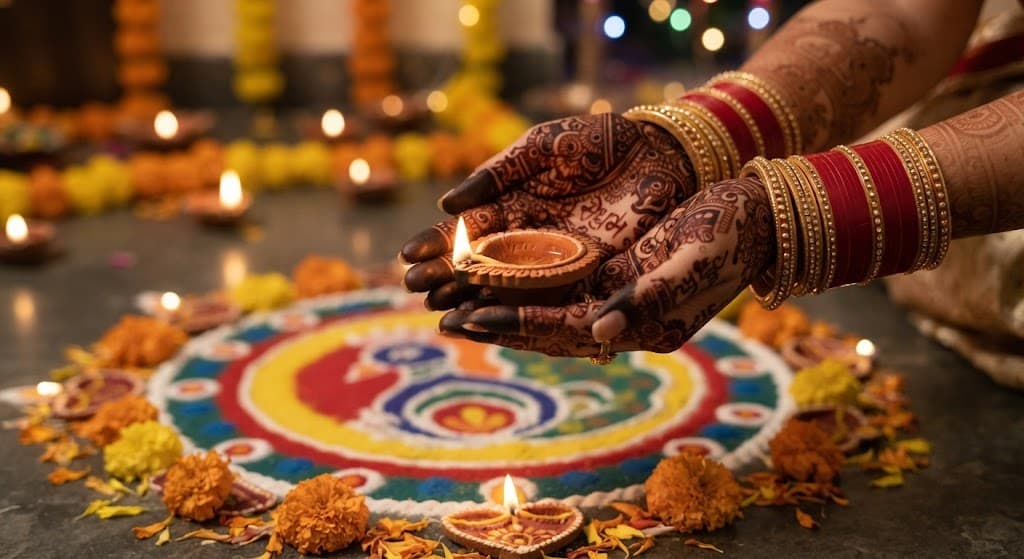
Diwali is the festival of lights, and for a lot of us it's also the festival of freshly hennaed hands. Mehndi on the evening before Lakshmi Puja, a little design for a Diwali party, a matching motif with your sisters for Bhai Dooj. It's part of getting ready, like the new clothes and the rangoli at the door.
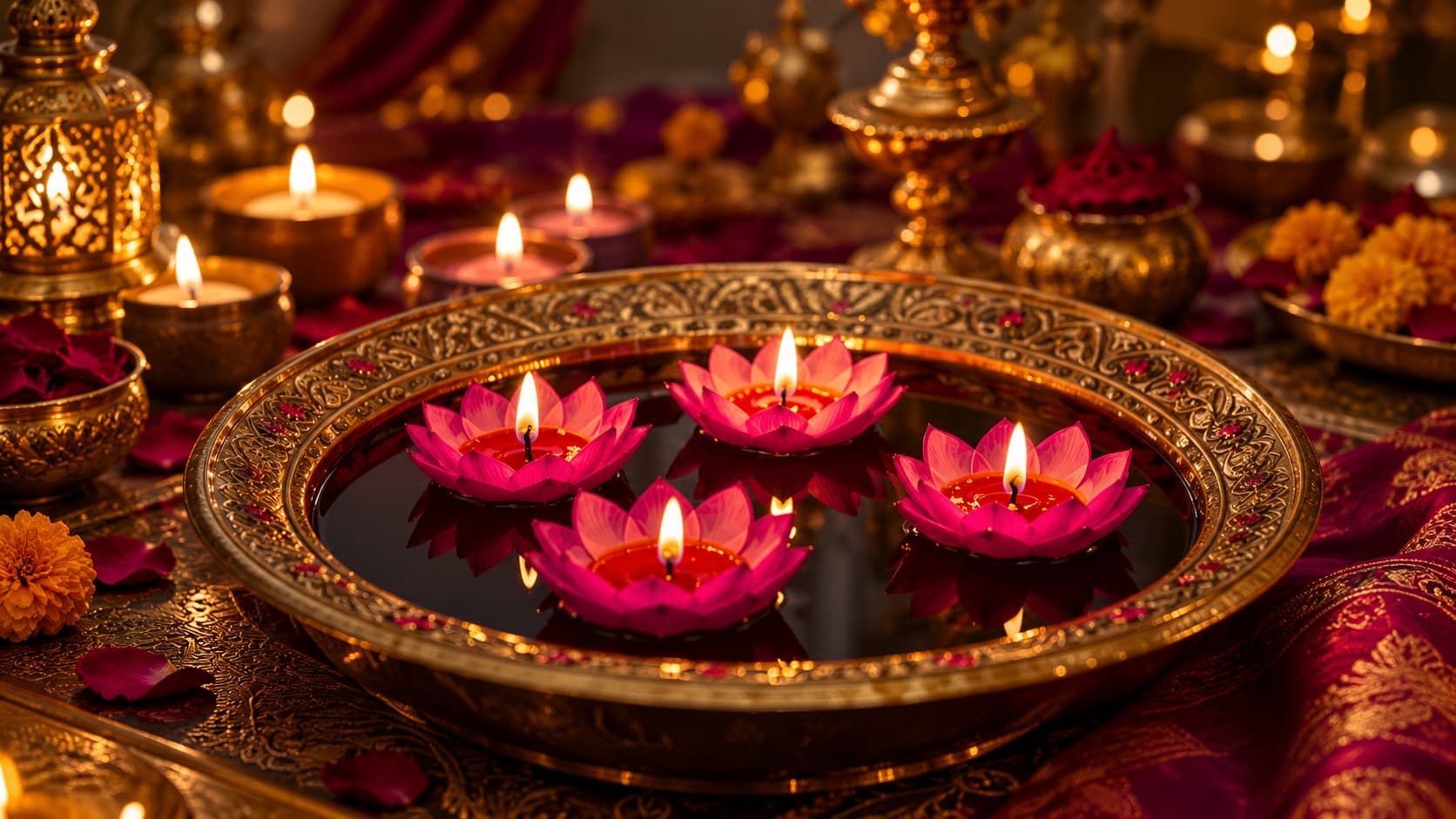
The prettiest Diwali designs borrow from everything else you'll see that week: diyas, rangoli patterns, the lotus, marigold torans, paper lanterns and sparklers. Here are twelve ideas, from a full palm of diyas to a single flame on one finger, plus the 2026 dates and when to apply your mehndi so it's at its darkest on the big night.
Quick answer: Diwali 2026 is on Sunday, 8 November, the day of Lakshmi Puja. The festival runs from Dhanteras on Friday 6 November to Bhai Dooj on Wednesday 11 November. The most loved Diwali mehndi designs use the festival's own images: diyas, rangoli-style mandalas, the lotus associated with Lakshmi, marigold torans, lanterns and sparklers. For the darkest colour on Lakshmi Puja, apply natural henna on 5 or 6 November (Dhanteras), and avoid black henna and "instant" cones.
At a glance · 12 photos
A quick preview of mehndi designs
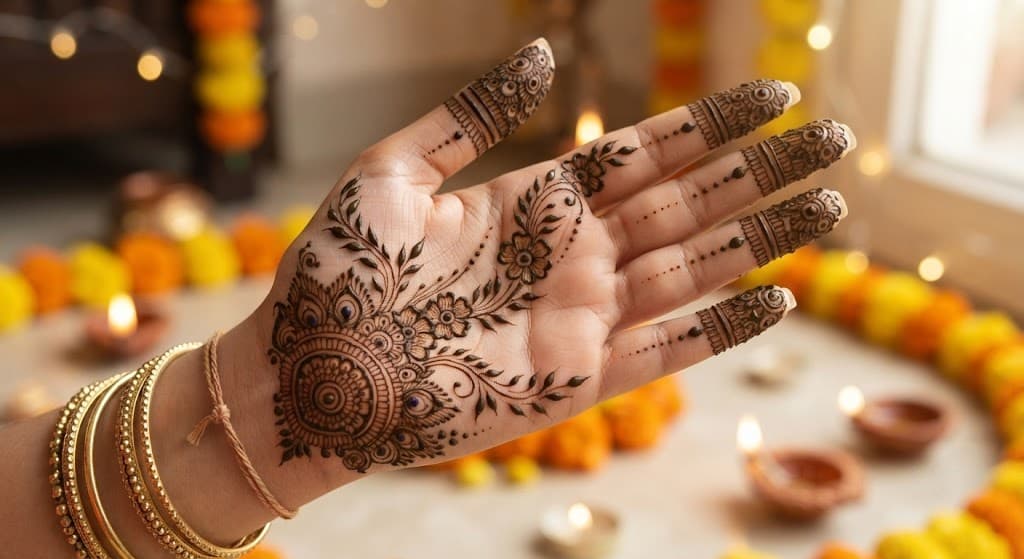
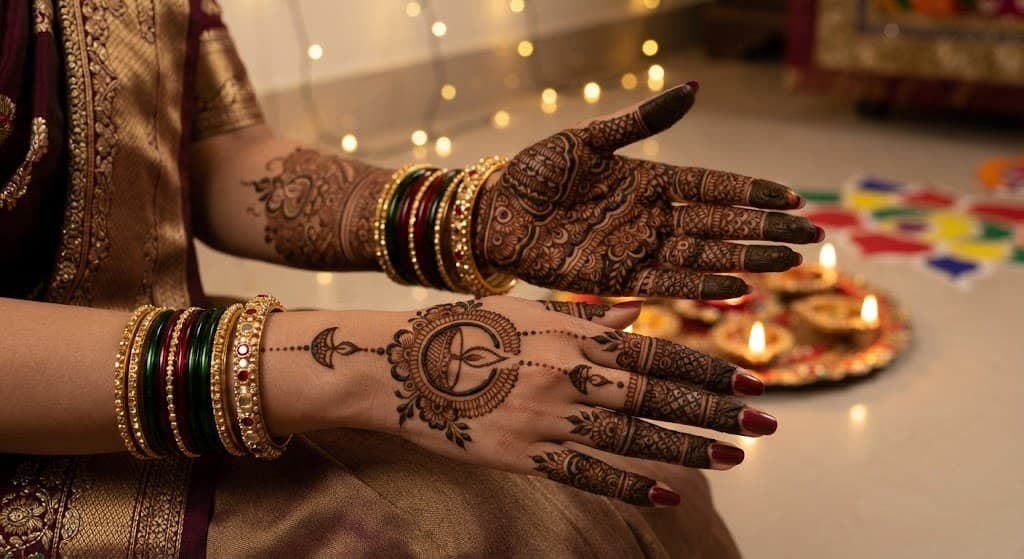
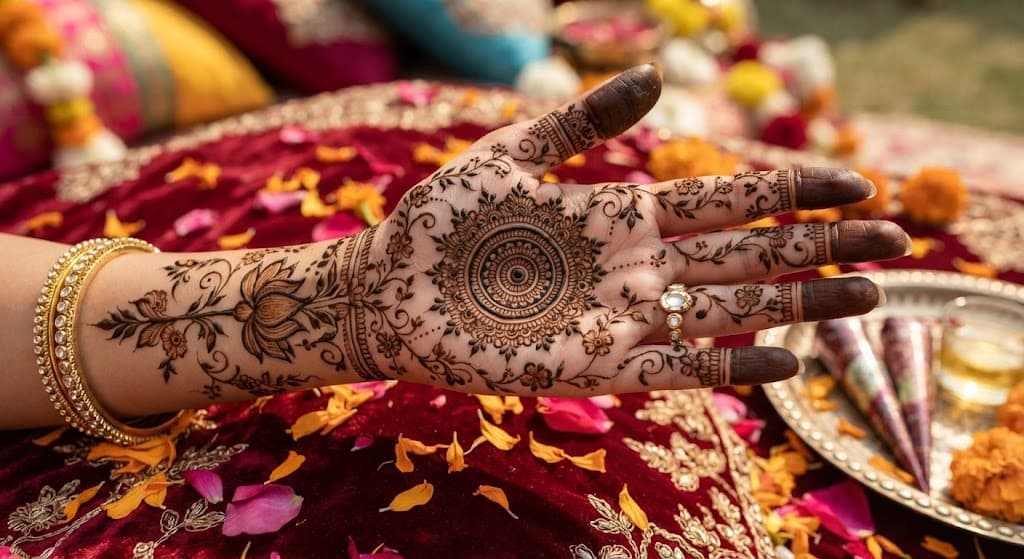
What's in this guide
- Diwali 2026: the festival days, and when to apply your mehndi
- The Diwali motifs and what they mean
- 12 Diwali mehndi designs to try
- Keeping your mehndi dark through a busy festival
- Booking an artist for Diwali week
- Frequently asked questions
Diwali 2026: the festival days, and when to apply your mehndi
Diwali celebrates light over darkness and good over evil.1 In 2026 the days fall like this in India,2 with the customs many families follow:1
| Day | Date in 2026 | What happens | For your mehndi |
|---|---|---|---|
| Dhanteras | Friday, 6 November | Many families clean their homes and buy gold, utensils or something new | A good evening to apply mehndi for Lakshmi Puja |
| Kali Chaudas | Saturday, 7 November | Observed in some regions, the day before Diwali | Mehndi applied today will be a little lighter on the night |
| Lakshmi Puja (Diwali) | Sunday, 8 November | Puja at dusk, diyas, fireworks and feasts | Your mehndi on show |
| Govardhan Puja | Tuesday, 10 November | Celebrated in some regions, with the Annakut food offering | Still at or near its darkest |
| Bhai Dooj | Wednesday, 11 November | Sisters pray for their brothers and feed them | A small, matching design for sisters |
In 2026, Narak Chaturdashi (Choti Diwali) falls on Sunday 8 November, the same day as Lakshmi Puja, so the festival is spread over six dates. Dates can differ by a day in some regions and outside India, so check a local panchang.
At the melas (fairs) many villages hold at Diwali, women often dress up and decorate their hands with henna.1
When to apply. Natural henna stains orange first and darkens to reddish brown over about three days.3 So for the darkest colour on Sunday 8 November, apply your mehndi on Thursday 5 November; Friday 6 November (Dhanteras) gives colour close to its darkest. Mehndi applied on the day of Diwali will still be quite orange during the puja.
Plan around the cleaning. Diwali week means scrubbing, washing and cooking, and water and soap fade fresh mehndi. If you can, finish the big cleaning before you apply it, and wear gloves for the washing up afterwards.
Still wearing your Karwa Chauth mehndi? Karwa Chauth falls ten days earlier, on 29 October,4 and mehndi usually fades within one to three weeks,3 so some colour may still be there on your palms. Two easy answers: put your Diwali design on the back of the hand, where the old stain fades first, or ask your artist to work the old colour into a dense palm design. Our Karwa Chauth mehndi designs guide has ideas if you're planning both.
The Diwali motifs and what they mean
Most Diwali designs mix two or three of these. Meanings vary between families, so take them as the usual ones, not rules.
| Motif | What it stands for | Where it looks best |
|---|---|---|
| Diya (oil lamp) | Light over darkness, and welcoming Lakshmi home | Centre of the palm, or one on each fingertip |
| Rangoli pattern | A welcome at the doorway; drawn as a round mandala | The palm, or the back of the hand |
| Lotus (kamal) | Lakshmi, who is often shown seated on a lotus; purity and plenty | Palm centre or wrist |
| Toran (marigold and mango leaves) | An auspicious welcome, like the garland over the door | A band across the base of the fingers |
| Lantern (kandil) | Light hung outside the home, especially in Maharashtra and Goa | Fingers, or the end of an Arabic trail |
| Kalash and coins | Prosperity; many families buy gold, utensils or something new on Dhanteras | Palm or wrist |
| Sparkler (phuljhadi) | Celebration and the fireworks of the night | A finger, as a small burst of dots |
Want to know more about the lotus, the mandala and other classic motifs? Read Mehndi motifs and their meanings. If you'd like a sacred symbol such as Om or Ganesha in your design, many families keep these on the palm and never on the feet; ask your elders.
12 Diwali mehndi designs to try
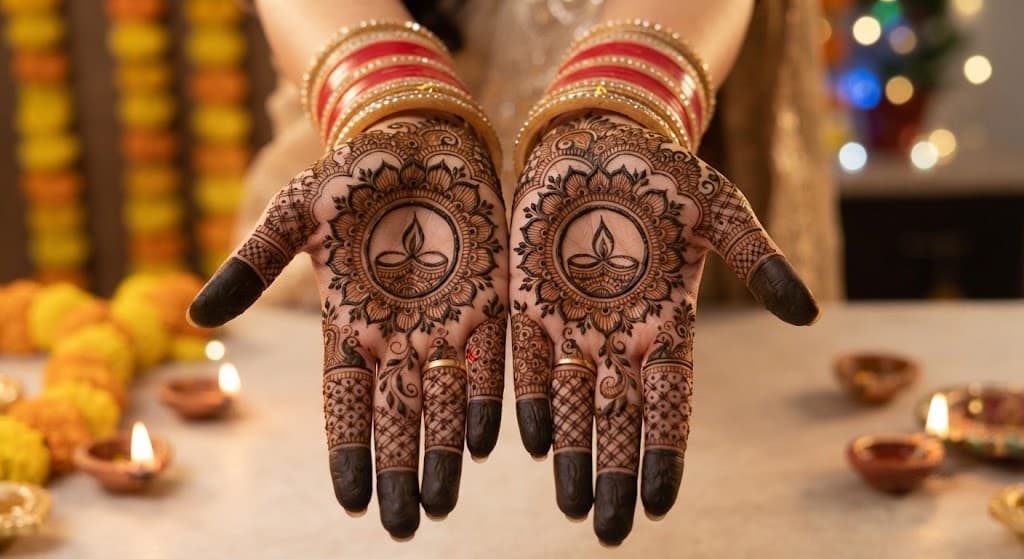
1. A diya in the palm
A single diya at the centre of the palm, its flame rising toward the fingers, framed by a ring of petals like a rangoli. It's the most recognisable Diwali design, simple enough for anyone and lovely in photos of you lighting the lamps.
2. A rangoli mandala
Turn the palm into a rangoli: a round mandala of petals, dots and curves, sometimes with a small diya or lotus at its heart. It's symmetrical, quick for an experienced artist, and suits every hand.
3. A diya on every fingertip
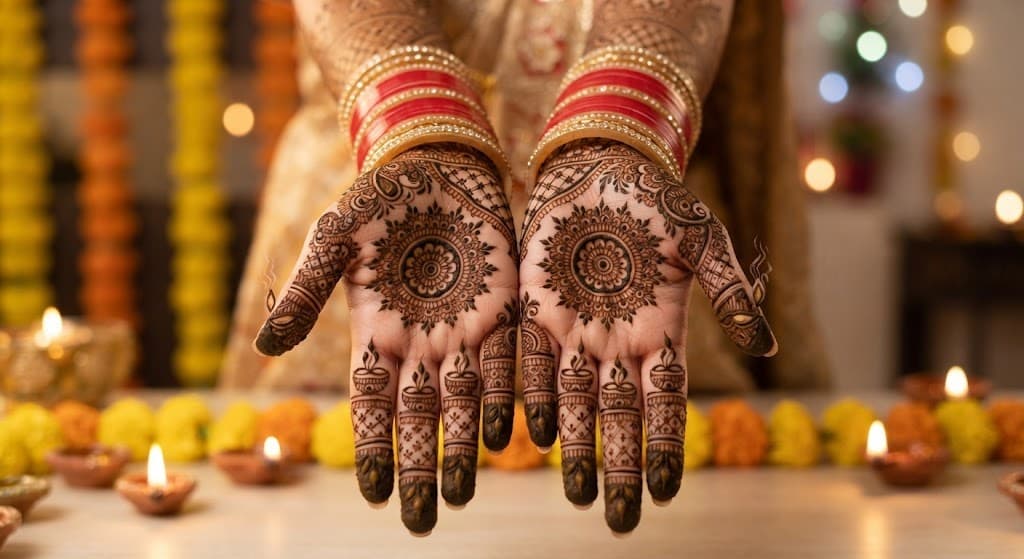
Five tiny diyas, one on each fingertip, with a simple vine or band on the palm. Hold your hands up and they look like a row of lamps. A favourite for guests at Diwali parties.
4. A lotus for Lakshmi
A full lotus in the palm, open and layered, with a small diya resting in it. The lotus is closely tied to Lakshmi, whose puja is the heart of Diwali, so it's a design with real meaning on the night.
5. The toran across your knuckles
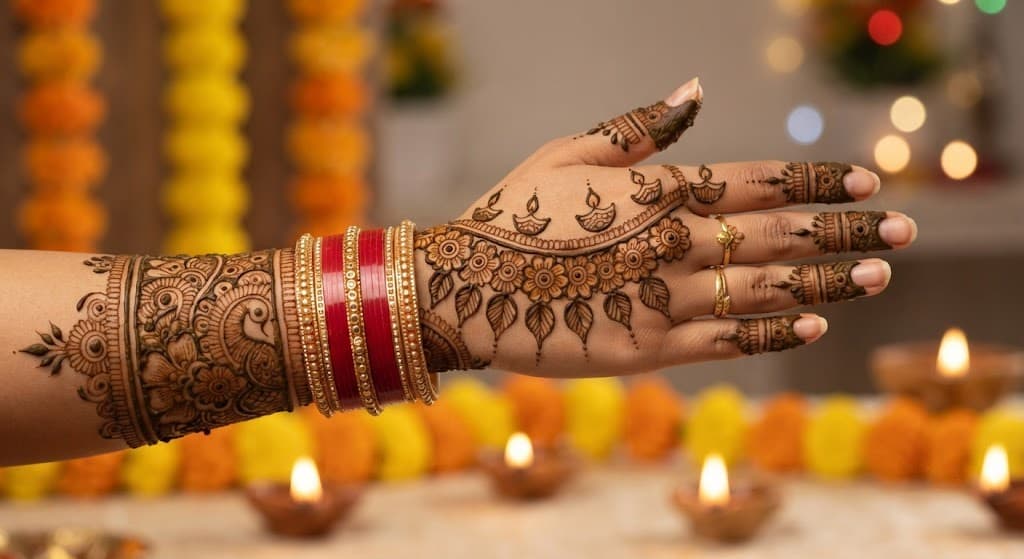
A band of marigold flowers and mango leaves across the base of the fingers on the back of the hand, just like the toran over your front door. Add fingertip caps and you're done.
6. An Arabic trail ending in a lantern
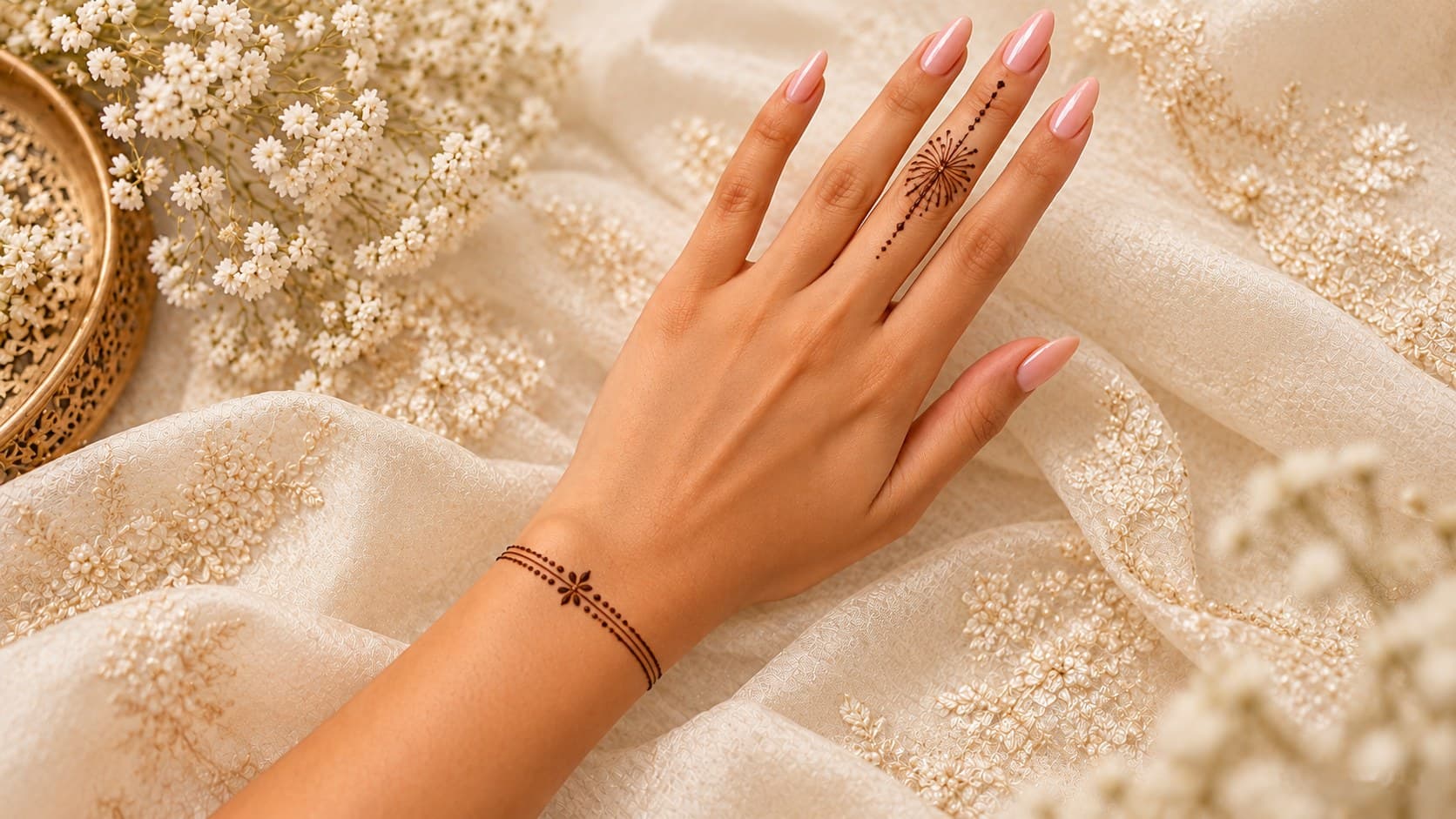
A bold Arabic floral trail across the back of the hand that ends in a hanging lantern on the index finger. Elegant, quick, and easy to wear to work the next day. Our guide to types of mehndi designs explains the Arabic style.
7. A sparkler on one finger
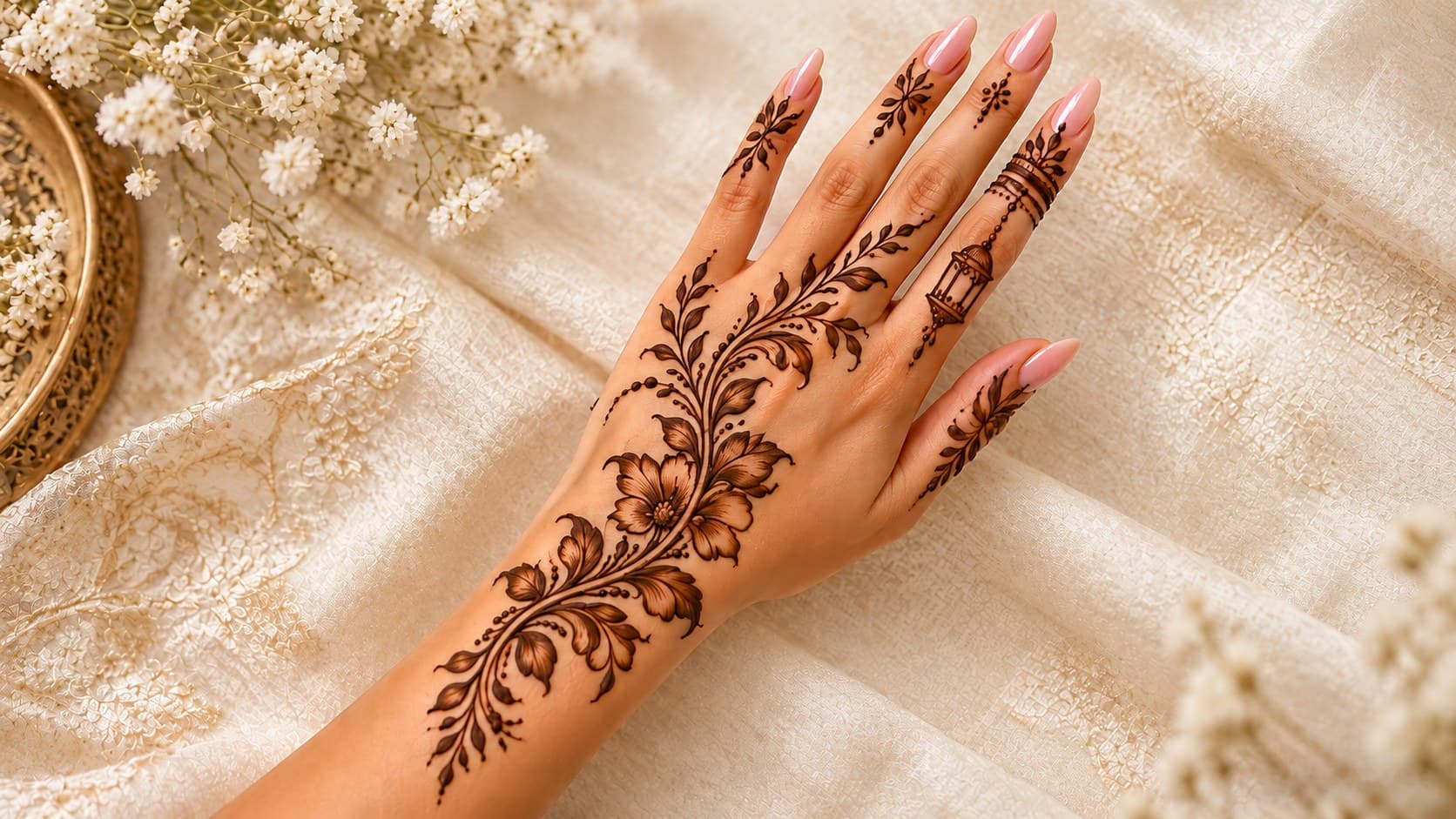
The minimal choice: a burst of dots and short lines like a phuljhadi on one finger, with a fine band at the wrist. It takes minutes and looks modern.
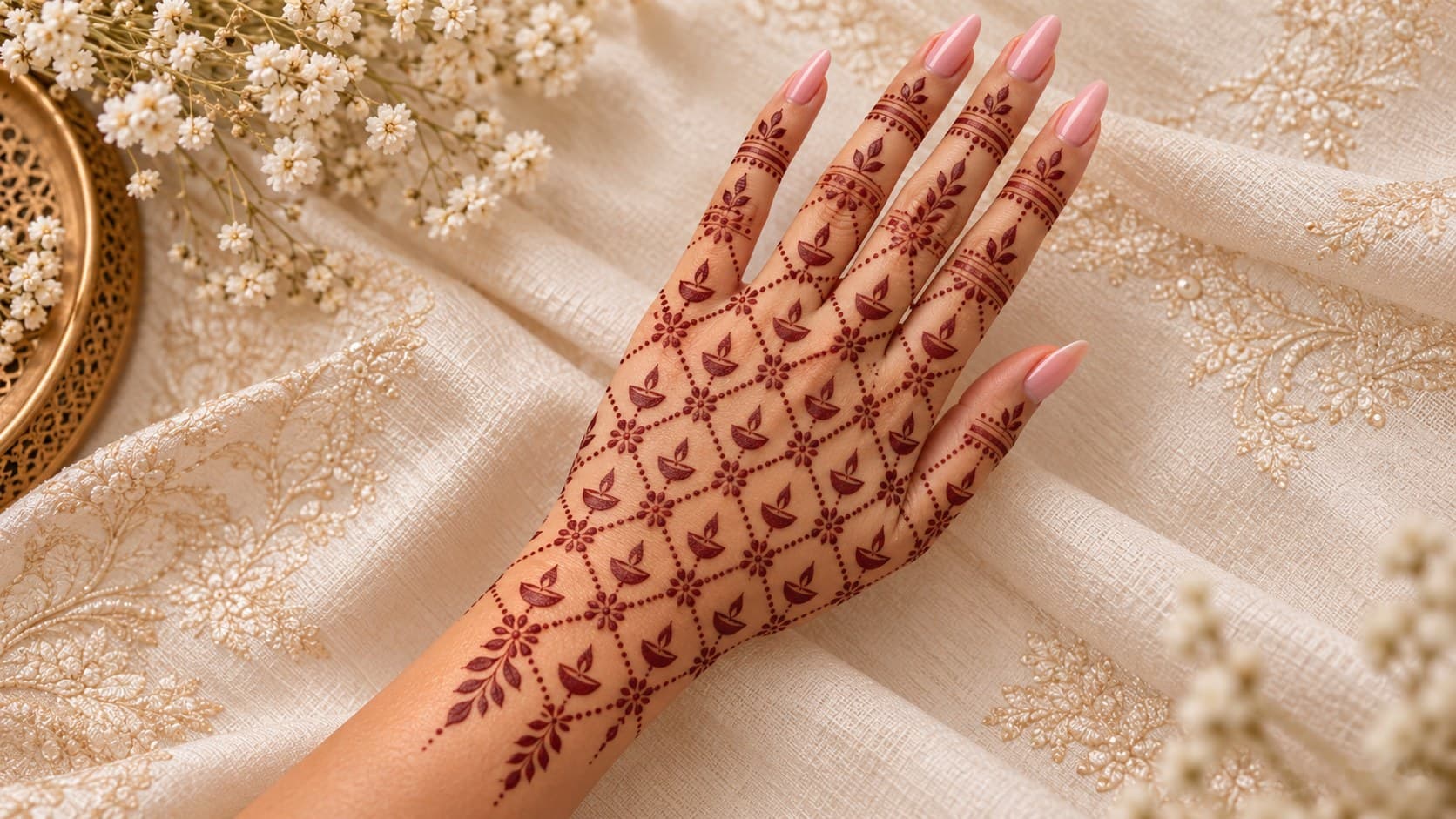
8. Diyas in a jaal
A dense design for the back of the hand: a jaal (net) pattern with a tiny diya in every few diamonds. It takes longer, but it's stunning in close-up photos and lasts well.
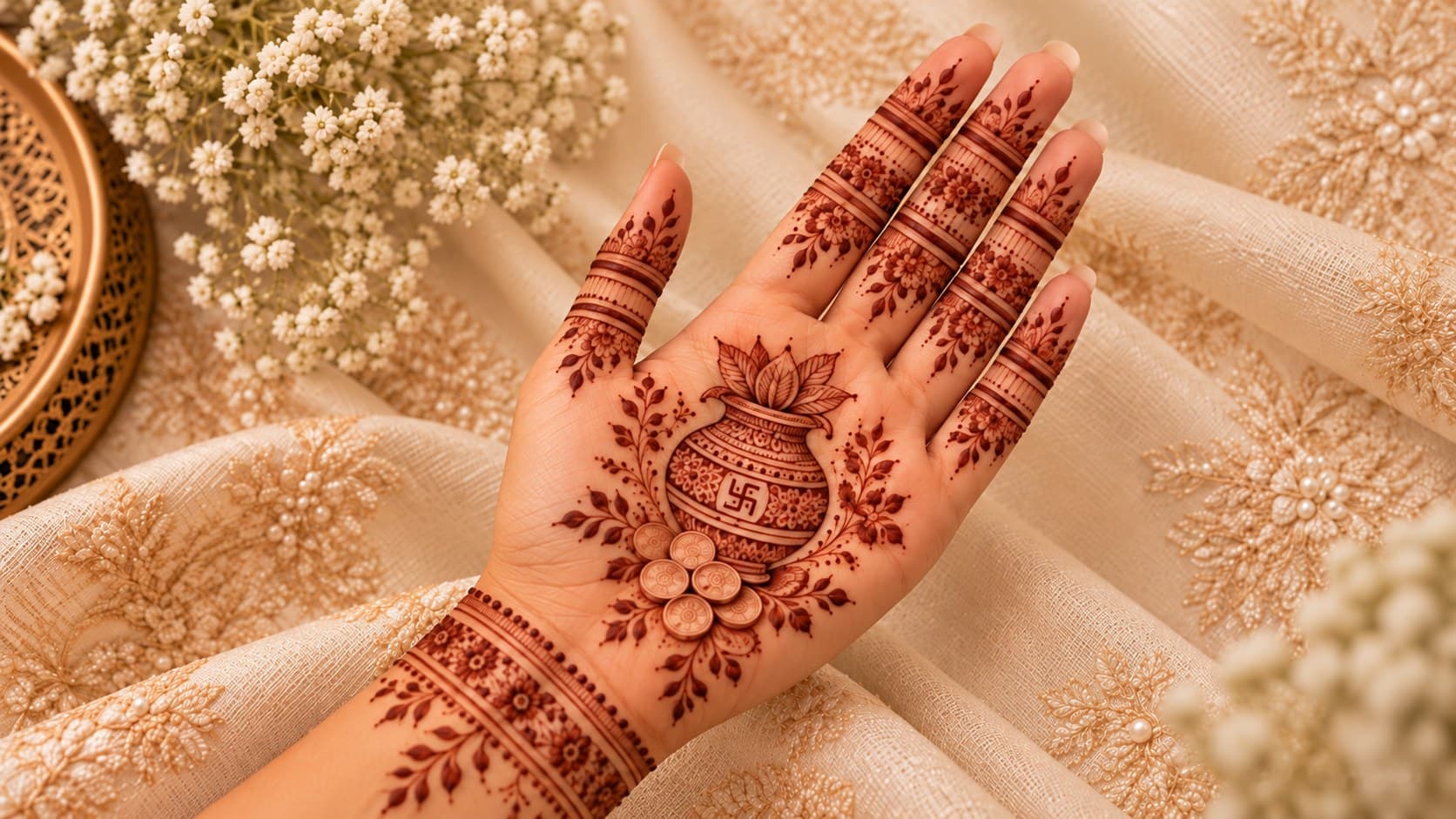
9. Kalash and coins for Dhanteras
A kalash on the palm with a few coins spilling from it, for the day many families buy something new. A playful, prosperity-themed design that also works for business owners doing their Diwali puja.
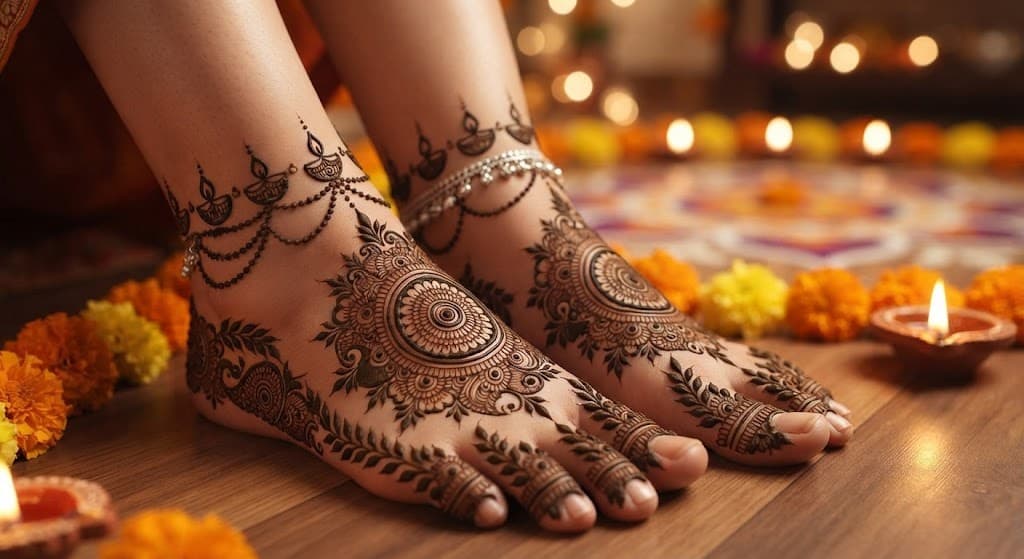
10. Rangoli on the feet
Many women decorate their feet for the puja too. Try a rangoli-style pattern on the top of the foot with filled toes, or a payal (anklet) of tiny diyas. Do the feet first so they're dry before you need to walk.
11. Matching designs for Bhai Dooj
On Bhai Dooj, sisters can wear a small matching motif: a diya, a lotus or a tiny tilak or knot on the same finger. It looks sweet in photos of all the siblings together.
12. Little diyas for children
A small diya and a star on a child's palm takes a minute and makes their Diwali. Keep it small, keep it away from their mouths, and never use black henna or instant cones on children.
Keeping your mehndi dark through a busy festival
- Use natural henna. Ask your artist what's in the cone. The ingredient used to blacken "black henna" is often a coal-tar hair dye containing PPD, which can cause dangerous skin reactions in some people.5 Health Canada's warning signs are a very dark black colour, a paste that sets very quickly, and little or no scent.6
- Seal it, then leave it. Once the paste is dry, dab it with lemon and sugar, then keep it on overnight.
- Scrape, don't wash. Scrape the dried paste off rather than washing it, and keep your hands away from water for a few hours afterwards.
- Protect it while you work. Gloves for the cleaning and the washing up make a real difference in Diwali week.
- Give it time. The colour keeps deepening for about three days, which is why applying it on 5 or 6 November pays off on Lakshmi Puja.
Our complete guide to mehndi has more on dark colour, aftercare and safety.
Booking an artist for Diwali week
Diwali parties, office celebrations and family pujas make this a busy week for mehndi artists, so book early if you want someone in particular.
- Book a group. Sisters, cousins and neighbours often book one artist at home together. Ask whether they charge per person, per hand or per design, and how long each person takes.
- Ask about the paste. Natural henna, freshly made.
- Share your design. Send two or three references and the motifs you want.
Find mehendi artists in your city, for example in Mumbai, Delhi NCR, Ahmedabad or Pune, and save designs you like to a board on Inspiration to show them.
Frequently asked questions
When is Diwali in 2026?
Diwali 2026 is on Sunday, 8 November in India, the day of Lakshmi Puja. The festival begins with Dhanteras on Friday 6 November and ends with Bhai Dooj on Wednesday 11 November.
When should I apply mehndi for Diwali?
Apply natural henna on Thursday 5 November for the darkest colour on Lakshmi Puja, or on Dhanteras, Friday 6 November, for colour close to its darkest. Henna starts orange and takes about three days to deepen, so mehndi applied on Diwali day will still look orange that night.
Which mehndi design is best for Diwali?
Designs built on the festival's own images work best: a diya in the palm, a rangoli mandala, a lotus for Lakshmi, a marigold toran across the knuckles or a lantern at the end of an Arabic trail. For something quick, try a tiny diya on each fingertip or a sparkler on one finger.
What is a simple mehndi design for Diwali?
A single diya in the palm with fingertip caps, a small rangoli mandala, or a sparkler on one finger. Each takes only a few minutes and still looks festive.
My Karwa Chauth mehndi hasn't faded yet. Can I still apply mehndi for Diwali?
Yes. Karwa Chauth is ten days before Diwali in 2026, so some colour may remain on your palms. Put your Diwali design on the back of your hand, where the old stain fades faster, or ask your artist to build a denser design over the palm.
What mehndi should I apply for Bhai Dooj?
Something small and matching works well for sisters: a diya, a lotus or a tiny knot on the same finger. Bhai Dooj falls on Wednesday 11 November in 2026, so mehndi from Dhanteras should still show well.
Share this guide
Send it to the family group, or keep it for later.
Questions about your wedding?
Our team answers questions about venues, vendors and the budget, free on WhatsApp.
About Shaadiwaale
Indian wedding planning in one place: venues and vendors with real prices, free kundli matching, invitations and tools to plan every function together.
Every function. Every family. One plan.
Notes
- Diwali, Wikipedia. What Diwali celebrates, the five days, diyas, rangoli, lanterns, and henna at the festival melas. ↩
- 2026 Diwali puja calendar for New Delhi, Drik Panchang. The dates of the festival days in 2026. ↩
- Henna, Wikipedia. The stain darkening over about three days, and fading within a few weeks. ↩
- Karwa Chauth 2026 date and time for Jaipur, Drik Panchang. Karwa Chauth on 29 October 2026. ↩
- Temporary tattoos, henna/mehndi, and "black henna": fact sheet, US Food and Drug Administration, content current as of 15 October 2024. ↩
- Black henna temporary tattoos, Health Canada. ↩