Explainer
Mehndi Motifs and Their Meanings: Mandala, Peacock, Elephant, Paisley, Moon and More
A dictionary of mehndi's picture language: what the peacock, elephant, mandala, paisley, lotus, moon and the bridal storyboard are often said to mean, and how to choose motifs that mean something to you.
- The peacock, elephant, lotus and kalash are classic bridal motifs
- Meanings vary between families: treat them as traditions, not rules
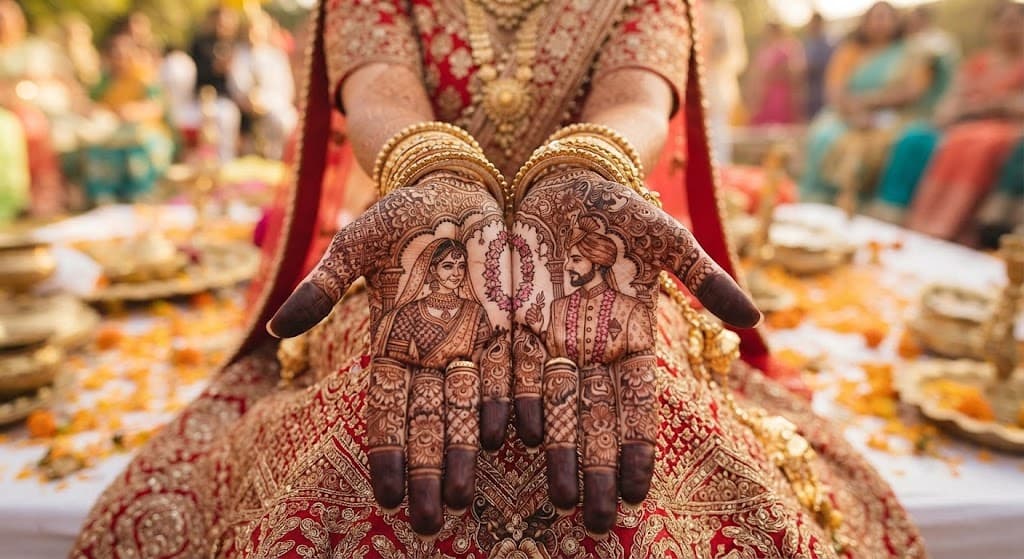
- The bride and groom are often drawn one on each palm, to meet when the hands join
- Ask elders before using sacred symbols, and keep them off the feet
Traditions · 14 min read · By The Shaadiwaale team · Updated 18 October 2026
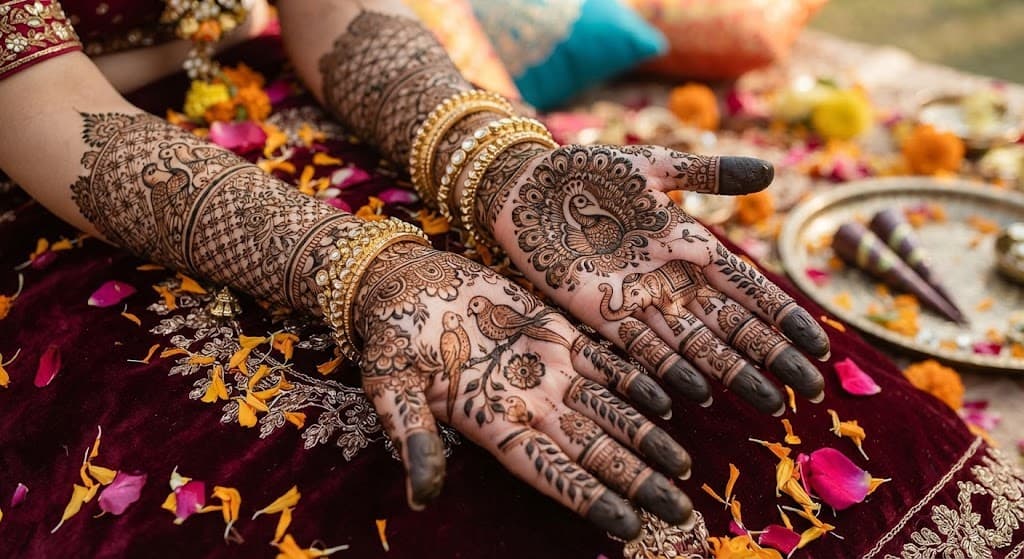
Ask a bride's grandmother why there's an elephant on the back of the hand and you'll probably get a story, not a definition. Good luck. A royal welcome. "Because my mother had one." Mehndi motifs work like that. They are a picture language passed down through families, artists and centuries of Indian art, and their meanings shift a little from one home to the next.
This guide is a dictionary of that language. It covers the classic motifs, what each is most often said to stand for, where artists usually place it, and which motifs go together for a bride, a groom, a guest or a festival. Use it to choose designs that mean something to you, and to understand the ones your family asks for.
Quick answer: The most common mehndi motifs and what they are often said to mean: the mandala (wholeness and balance), the peacock (beauty, grace and love), the elephant (good fortune and a royal welcome), the paisley or ambi (fertility and plenty, from the mango), the lotus (purity and new beginnings), flowers and vines (joy and a growing life together), the moon (love and longing, central to Karva Chauth and Eid), fish (fertility and good luck), the kalash (abundance), and the doli and the bride and groom figures (the wedding journey itself). Meanings vary by family and region, so treat them as traditions, not rules.
What's in this guide
- A note on what motifs "mean"
- Mehndi motifs at a glance: the dictionary
- Circles and flowers: mandala, lotus, rose and vines
- Birds and animals: peacock, elephant, parrot, fish and more
- Shapes with roots: paisley, jaal and the arch
- Sky symbols: moon, sun and stars
- The wedding storyboard: doli, baraat, couple and music
- Modern motifs: hearts, initials, dates and personal symbols
- Sacred symbols: a respectful note
- Motifs for each occasion
- Building a design that means something
- Frequently asked questions
A note on what motifs "mean"
Most mehndi motifs come from the same shared store of images as Indian textiles, rangoli, temple carvings and miniature paintings. The peacock on a bride's palm is the same peacock you'll find on a Kanjeevaram border or a palace wall. The paisley came to Kashmir from Persia. The lotus has been a sacred image in Indian art for millennia.
So the meanings come from those wider traditions, from the stories people tell about each animal or flower, and from family habit. That's why two families can give different answers for the same motif, and both be right. The meanings below are the ones you'll hear most often. If your family has its own, keep it.
Why it matters: you don't need a reason to like a motif. But knowing the usual meanings helps you choose a design that tells the story you want, and avoid one that might surprise an elder.
Mehndi motifs at a glance: the dictionary
| Motif | Also called | Often said to stand for | Where it usually goes | Pairs well with |
|---|---|---|---|---|
| Mandala | Gol tikki, chakra | Wholeness, balance, the circle of life | Centre of the palm, back of the hand | Fingertip caps, petals, dots |
| Lotus | Kamal | Purity, new beginnings, prosperity | Palm centre, wrist | Vines, mandalas, peacocks |
| Flowers and vines | Phool, bel | Joy, growth, a life that keeps flowering | Trails across the hand, fingers | Leaves, paisleys, Arabic layouts |
| Peacock | Mor | Beauty, grace, love, the monsoon | Palm, back of the hand, wrist | Lotus, vines, the couple |
| Elephant | Hathi | Good fortune, a royal welcome, wisdom | Back of the hand, wrist, palm | Doli, baraat, paisleys |
| Parrot | Tota | Love and courtship, a messenger | Fingers, around the couple | Flowers, the couple |
| Fish | Machli | Fertility, good luck, plenty | Fingers, palm | Lotus, water lines |
| Paisley | Ambi, kairi, keri | Fertility and plenty (the mango) | Everywhere: borders, fingers, fillers | Vines, peacocks, jaal |
| Jaal | Net, lattice | Structure; ties that bind | Filling gaps, the back of the hand | Bharwa shapes, arches |
| Arch | Jharokha, mehrab | A doorway or window: the bride's new home | Over the palm | The couple, a doli |
| Moon | Chand | Love, longing, the waiting of Karva Chauth; Eid | Palm, fingers | Stars, sieve, karwa |
| Sun | Suraj | Life, energy, a lasting bond | Palm centre | Moon, rays |
| Kalash | Kalash, kumbh | Abundance and a full, blessed home | Palm, wrist | Lotus, coconut, leaves |
| Doli | Palki, palanquin | The bride's journey to her new home | Back of the hand, arm | Baraat, elephant |
| Bride and groom | Dulha dulhan | The couple themselves | One on each palm, facing | Varmala, pheras, arches |
| Shehnai and dhol | Musicians | The music of the wedding day | Arms, sides of the hand | Baraat, doli |
| Swing | Jhoola | Monsoon, togetherness, Teej | Palm, arm | Peacock, leaves |
| Heart | Dil | Love (a modern favourite) | Fingers, palm | Initials, dates |
Circles and flowers: mandala, lotus, rose and vines
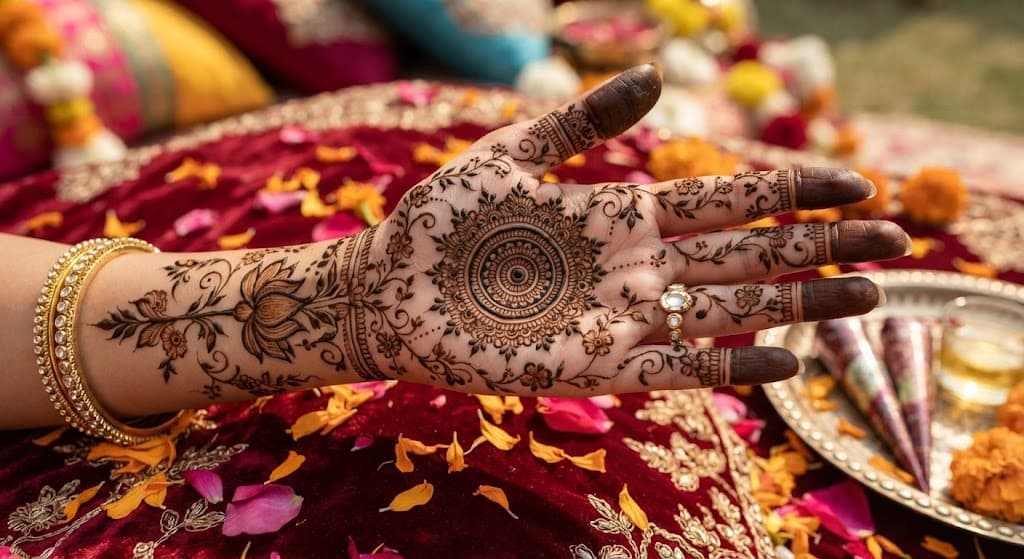
Mandala, or gol tikki
A circle built from rings of petals, dots and lines, radiating from a centre. In Hindu and Buddhist traditions the mandala is a symbol of the universe and wholeness, and in mehndi it's usually read as balance and the circle of life. It's also the most practical motif there is: it fits any palm, takes little time, and looks finished on its own. That's why a palm mandala with fingertip caps is the classic guest and festival design, and a favourite for children.
Lotus, or kamal
The lotus grows out of muddy water and opens clean and beautiful, which is why it stands for purity and new beginnings across Indian traditions. It is closely associated with Lakshmi, the goddess of prosperity, who is often shown seated on a lotus. In bridal mehndi it often sits at the centre of the palm or the wrist, the start of a new life.
Rose and other flowers
Roses arrived in mehndi through Arabic and Mughal-influenced styles and are now everywhere. Flowers in general stand for joy and celebration. In Moroccan henna traditions, floral patterns are said to represent fertility and happiness.1
Vines and leaves, or bel
A trailing vine that keeps growing is an easy image for a marriage that keeps flowering. Practically, the bel is what joins a design together: it links a flower on the finger to a mandala on the palm, or runs from the fingertips to the wrist in an Arabic trail.
Birds and animals: peacock, elephant, parrot, fish and more
Peacock, or mor
The peacock is the star of Indian mehndi. It is the national bird of India, and a constant presence in Indian temple art, textiles and poetry. Krishna is often shown with a peacock feather in his crown, and Kartikeya rides a peacock.2 In mehndi, the peacock usually stands for beauty, grace and love. Because peacocks dance when the rains come, it's also tied to the monsoon and to Teej.
Artists love it for practical reasons too: the long neck and the fanned tail fill a palm or the back of a hand beautifully. Look for peacocks facing each other across two palms, or a single peacock with its tail sweeping down the wrist.
Elephant, or hathi
The elephant is a symbol of royalty, strength and good fortune in India, and it's closely linked with Ganesha, who is worshipped first at the start of any auspicious event as the remover of obstacles. In wedding mehndi, an elephant is often read as a royal welcome for the bride and wishes for a lucky start. Many families like the trunk raised, a common sign of good luck. Elephants appear decorated with howdahs, sometimes carrying the groom in the baraat.
Parrot, or tota
Parrots appear around the couple in many traditional designs, as messengers of love. In Hindu art, Kamadeva, the god of love, has a parrot as his vahana, the creature that carries him,3 which may be why the bird is linked with courtship and romance. Parrots are small, so they often sit on a finger or perch on a vine.
Fish, or machli
Fish are an old symbol of fertility and plenty, and a sign of good luck in many Indian communities. In Bengali weddings, fish are especially auspicious. In mehndi, a pair of fish or a fish inside a lotus pond is a quiet, lovely detail, often on a finger.
Birds in flight, butterflies and swans
Doves and other birds in flight are newer additions, usually read as freedom, peace or messages of love. Butterflies stand for change and new life, and swans in pairs for lasting love. These are popular with modern brides and in Arabic and Indo-Arabic designs.
Shapes with roots: paisley, jaal and the arch
Paisley, ambi or kairi
The teardrop with a curled tip is everywhere in Indian design. Its Indian names, ambi and kairi, come from the words for mango, and the mango is an old symbol of fertility and plenty, which is the meaning usually given to the paisley in mehndi. The shape itself is of Persian origin, called boteh, and it reached Europe on Kashmir shawls; the English name comes from Paisley, a Scottish town whose weavers copied those shawls in the 1800s.4 Artists use paisleys as borders, fillers, finger designs and centrepieces.
Jaal, the net
Jaal means net. A lattice of crossing lines, often with a dot or tiny flower in each diamond, it fills the spaces between bigger motifs and is a signature of Rajasthani bridal work. It's more a texture than a symbol, though some families like to see it as the ties that bind two families together.
The arch, jharokha or mehrab
Many bridal palms are framed by an arch, like a jharokha window or a doorway. It's easy to read as the threshold of the bride's new home, and the shape echoes Mughal and Rajput architecture. Inside the arch, artists often place the couple, a doli or a peacock.
Sky symbols: moon, sun and stars
Moon, or chand
The moon may be the most emotional motif of all. On Karva Chauth, married women fast until they see the moon, often through a sieve, and then look at their husband's face. So Karva Chauth mehndi often shows a crescent or full moon, the sieve (channi), the karwa pot and the couple. For Eid and Chaand Raat, the crescent moon and stars are the favourite motifs of the night. In general, the moon in mehndi stands for love, longing and waiting for someone. For twelve designs built around the moon, see Karwa Chauth mehndi designs.
Sun, or suraj
The sun stands for life, energy and warmth. A sun and moon together are often read as a lifelong bond: two halves that complete the sky.
Stars
Stars are fillers and sparkles, usually paired with the moon. In tattoo-style mehndi, a single small star on a finger is a popular minimal touch.
The wedding storyboard: doli, baraat, couple and music
Traditional Rajasthani bridal mehndi often tells the story of the wedding itself, across both hands and arms.
- Bride and groom (dulha dulhan). Usually the groom on one palm and the bride on the other, so that they face each other when the bride holds her palms together. Sometimes they're shown at the varmala or the pheras.
- Doli or palki. The palanquin that carries the bride to her new home. It's one of the most emotional motifs, standing for the bride's journey.
- Baraat. The groom's procession, often with an elephant or a horse, musicians and dancers.
- Shehnai and dhol. The instruments of the wedding, standing for celebration and the day's music.
- Kalash. The decorated pot, filled with water and topped with mango leaves and a coconut in Hindu rituals, stands for abundance and a full, blessed home.
Modern brides often extend the storyboard: the first meeting, the proposal, a favourite trip, their pets, the city where they live. If it's part of your story, it can be part of your mehndi. Portrait work like this needs a skilled artist, so check their real portfolio first. We explain portrait and story mehndi among the other styles in Mehndi styles explained.
Modern motifs: hearts, initials, dates and personal symbols
- Hearts. Not traditional, but hugely popular, especially in minimal and tattoo-style designs. A small heart on a ring finger is a lovely quick touch.
- Initials and names. Hiding the groom's name or initials in the bride's design is a much-loved tradition;5 in many families the groom then has to find it, often in front of everyone. Agree on the spelling and the script before the day.
- Dates and words. The wedding date in a band on the wrist, "Mr and Mrs", a word in Devanagari or Urdu.
- Personal symbols. A landmark, a favourite flower, the outline of a pet, a guitar, a passport stamp. Anything that means something to the two of you.
Sacred symbols: a respectful note
Some designs include religious symbols, such as Om, a swastika in its Hindu sense, Ganesha, or Arabic calligraphy. Many families welcome them on the palms as a blessing. Others prefer not to have sacred images on skin at all, and many avoid placing them on the feet, out of respect. Mehndi also fades by shedding with the skin, and some families are uncomfortable with a sacred image wearing away in daily life.
If you're unsure, ask an elder in each family before the day, and talk to your artist about placing sacred symbols on the palm rather than the feet, or using a gentler symbol such as a lotus or kalash instead.
Motifs for each occasion
| Occasion | Popular motifs | Why |
|---|---|---|
| Bridal mehndi | Bride and groom, doli, peacocks, elephants, kalash, arches, hidden name | The story of the wedding and wishes for the marriage |
| Groom's mehndi | A small mandala, the bride's initials, a geometric band, a shagun dot | Simple, bold and personal |
| Karva Chauth | Moon, sieve (channi), karwa pot, the couple, diyas | The story of the fast |
| Teej | Swing (jhoola), peacocks, leaves, Shiva and Parvati | The monsoon festival of togetherness |
| Eid and Chaand Raat | Crescent moon, stars, lanterns, bold florals | The new moon that marks Eid |
| Diwali | Diyas, lamps, rangoli-style mandalas, lotus | Light and Lakshmi's lotus |
| Raksha Bandhan | Rakhi threads, sisters and brothers, small flowers | The bond between siblings |
| Engagement and roka | Rings, hearts, initials, small florals | A lighter design for the first function |
| Baby shower (godh bharai) | A mother and baby, small florals, a cradle | New life on the way |
| Children | Mandala, stars, hearts, a smiling sun | Small, quick and cheerful |
Building a design that means something
- Start with one or two motifs that matter. A peacock for your grandmother, the moon for your first Karva Chauth, a lotus because it's your favourite flower.
- Let the artist build around them. Tell them the motifs, the style and the placement, and let them design the structure: vines, jaal and borders.
- Balance meaning and time. Each figure adds time. A storyboard to the elbows is a long sitting; one peacock on each palm is not.
- Think about both hands together. Many motifs, especially the couple and pairs of peacocks, are designed to mirror each other across the two palms.
- Check the colour. Motifs on the palm stain darkest. If a motif really matters, put it there.
Then find the right artist. Browse mehendi artists on Shaadiwaale in your city, such as Delhi NCR, Jaipur or Kolkata, and save motifs you love to a board on Inspiration. For how these motifs came to India, read the history of mehndi, and for the rituals around the bridal sitting, Mehndi ceremony rituals and their meaning.
Frequently asked questions
What does the peacock mean in mehndi?
The peacock usually stands for beauty, grace and love. It's India's national bird, a symbol of the monsoon, and linked with Krishna, who is often shown with a peacock feather in his crown. It's one of the most popular bridal motifs.
What does the elephant mean in mehndi?
The elephant stands for good fortune, royalty and wisdom, and is linked with Ganesha, the remover of obstacles. In bridal mehndi it is often read as a royal welcome for the bride. Many families prefer the trunk raised, for luck.
What does a mandala mean in mehndi?
A mandala is a circle that radiates from a centre, and it usually stands for wholeness, balance and the circle of life. It's also a practical, quick design that suits any palm, which is why it's popular for guests, festivals and children.
Why is the paisley used in mehndi?
The paisley, called ambi or kairi in India after the mango, is an old symbol of fertility and plenty. The shape is of Persian origin; it came to Kashmir, and Kashmir shawls later carried it to Europe. It's also an easy shape to use as a border, filler or centrepiece.
What does the moon mean in Karva Chauth mehndi?
On Karva Chauth, married women fast until moonrise and look at the moon, often through a sieve, before seeing their husband's face. The moon in Karva Chauth mehndi stands for that waiting and for love. It's often drawn with the sieve, the karwa pot and the couple.
Why do brides hide the groom's name in their mehndi?
It's a playful tradition: the groom has to find his name or initials hidden in the design, often in front of the family. Some families say whoever finds it first will have the upper hand in the marriage.
Can I put religious symbols in my mehndi?
Many families welcome symbols such as Om or a kalash on the palms as a blessing, while others prefer not to have sacred images on skin, and many avoid putting them on the feet. Ask your elders, and talk to your artist about placement.
Which mehndi motifs are considered lucky for brides?
The elephant (with its trunk raised), the kalash, the lotus, fish, the paisley and the peacock are all traditionally seen as lucky or auspicious, though meanings vary between families and regions.
Share this guide
Send it to the family group, or keep it for later.
Questions about your wedding?
Our team answers questions about venues, vendors and the budget, free on WhatsApp.
About Shaadiwaale
Indian wedding planning in one place: venues and vendors with real prices, free kundli matching, invitations and tools to plan every function together.
Every function. Every family. One plan.
Notes
- Moroccan wedding henna: a timeless tradition, Arabia Weddings. Floral and geometric henna motifs and the meanings given to them. ↩
- Indian peafowl, Wikipedia. India's national bird; Krishna's peacock feather; Kartikeya's peacock; the peacock in Indian art. ↩
- Kamadeva, Wikipedia. The parrot as Kamadeva's vahana. ↩
- Paisley (design), Wikipedia. The Persian boteh, ambi and kairi from the mango, Kashmir shawls, and the name from Paisley in Scotland. ↩
- Mehndi, Wikipedia. Hidden names and initials in bridal designs; mehndi at festivals. ↩
- The henna plant: transcending time, religion and culture, Natural History Museum, London. Henna as a symbol of joy across faiths. ↩